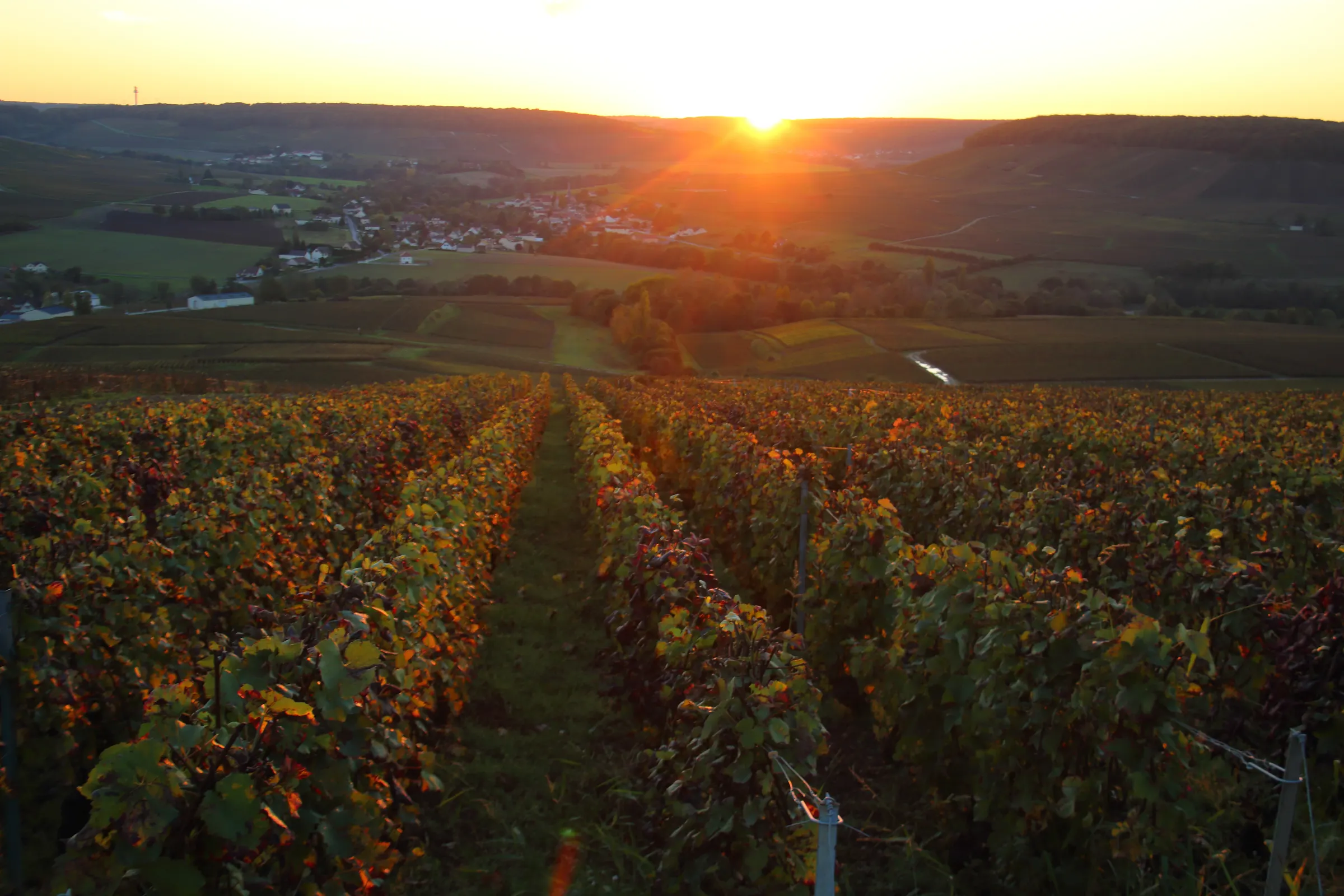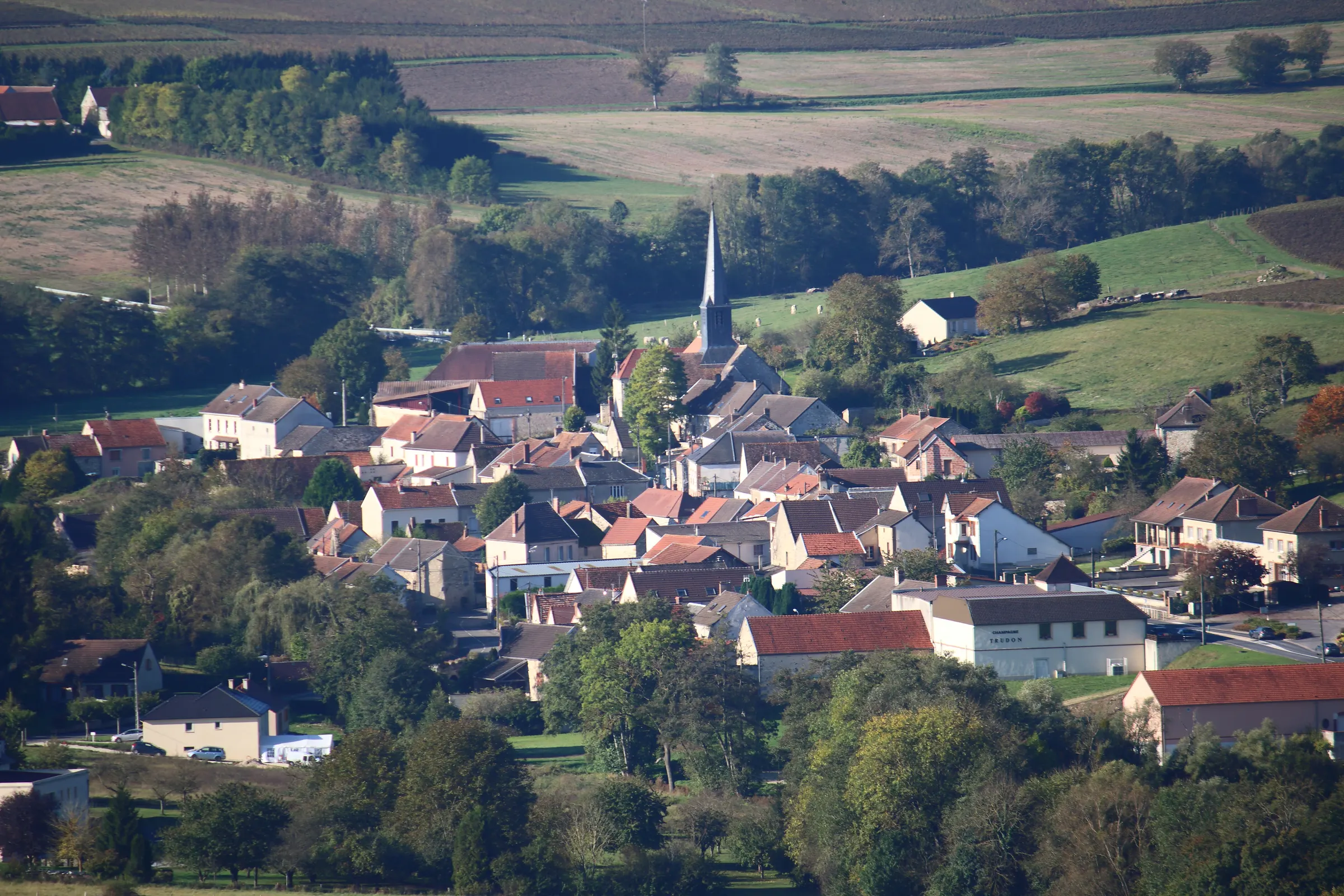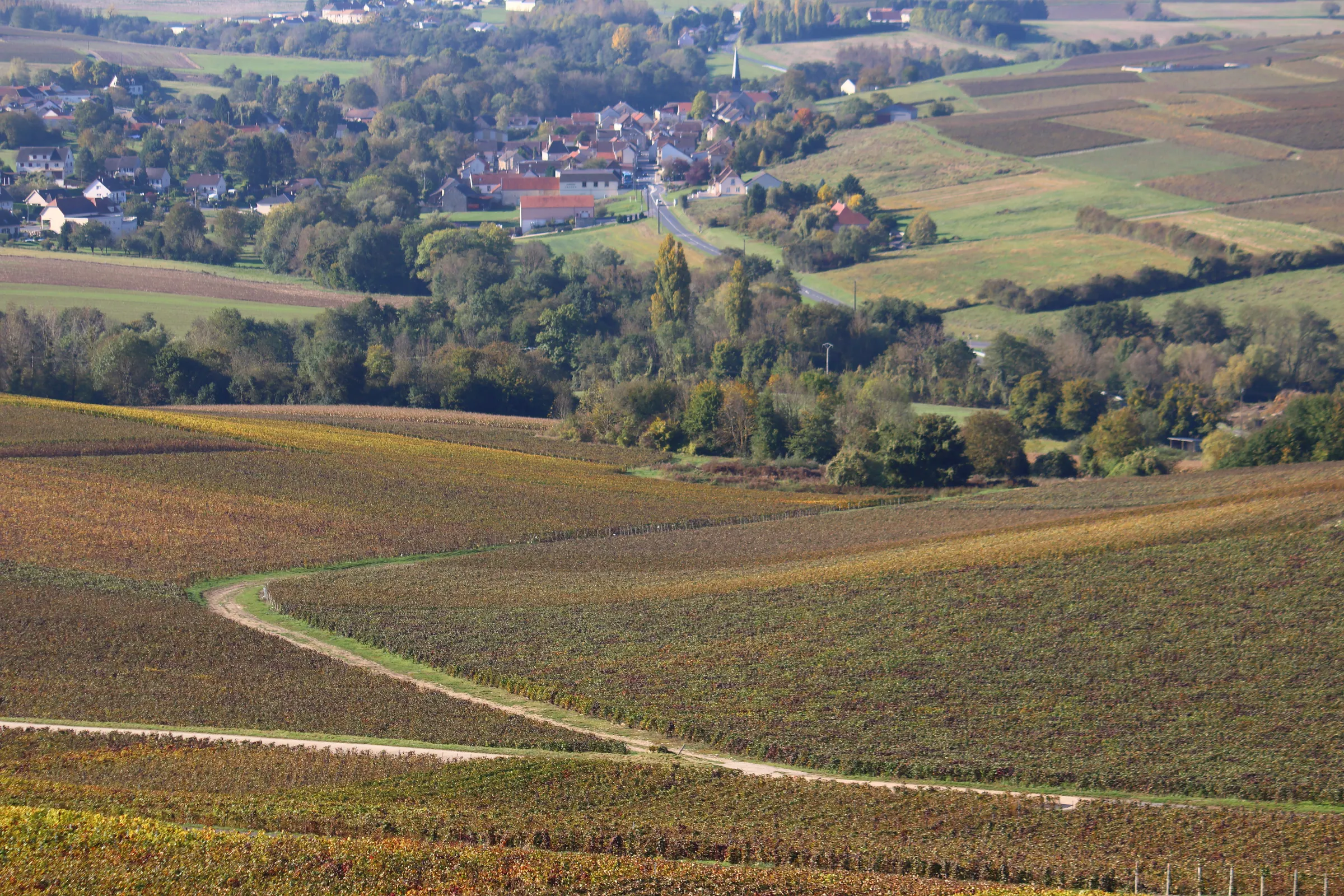
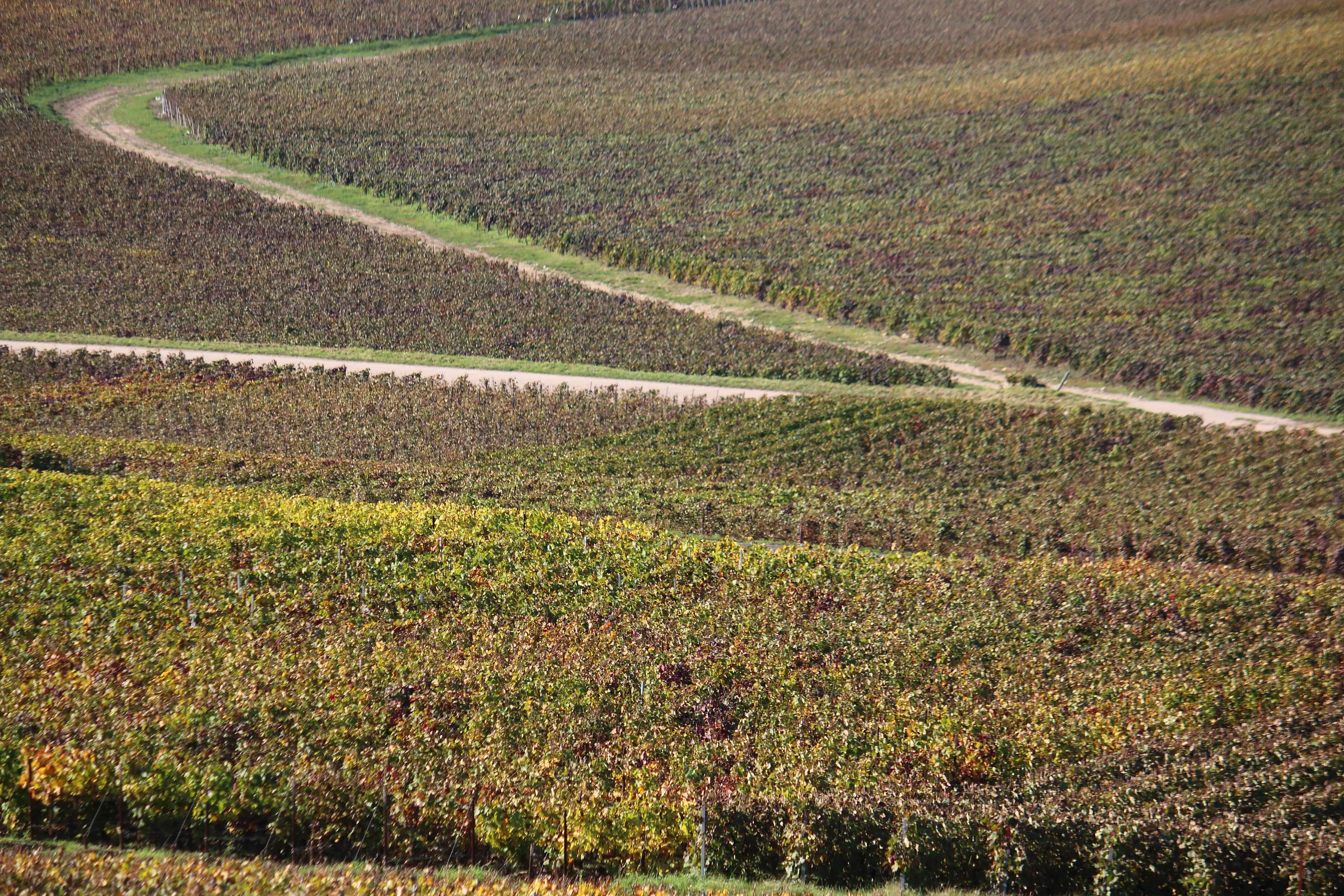
Visiting Champagne during harvest means arriving while the grapes are picked by hand and taken to the presses. The harvest generally falls in September, but in recent years it has often begun as early as mid-August.
The big houses of Reims and Épernay keep their cellar tours running through the picking weeks. Growers in the villages run picking sessions and press visits, and some villages hold an end-of-harvest meal.
This page covers how the dates are set, how to get there, which visits run at harvest time, what they cost and how to behave around the vines.
How the harvest dates are set
The start date changes every year. The Comité Champagne sets it when the balance between acidity and ripeness is right, using the MATU network of volunteer growers who follow the vines on 600 control plots.
Dates are set for each commune and each grape variety, and every grower must respect the date for the commune and variety. From one commune to the next, the start can differ by up to ten days. The Côte des Bar tourist office puts the usual publication of the start dates between August 15 and 25.
Start dates in recent years:
- 2021: picking began on September 6, with start dates by village and variety between September 6 and 27.
- 2025: the Comité announced the harvest ban on Wednesday, August 20, and the Reims tourist office gave the harvest dates as August 22 to September 4.
- 2026: the first vineyards began picking on August 6, the traditional harvest ban came on August 12, and picking was widespread from August 17, about 14 days earlier than in 2025. It was the earliest harvest ever recorded in Champagne.
How long it lasts
An estate's harvest lasts one to three weeks. In the Montagne de Reims and the Côte des Blancs, where different varieties ripen at different times, it can run up to 4 weeks. In the Marne Valley, where pinot meunier dominates, it is sometimes concentrated in a single week. Across the whole appellation, picking is spread over almost a month.
What happens in the vines
Champagne grapes are picked entirely by hand. No machines are used, and this is one of the specific features of the Champagne designation. Around 120,000 seasonal workers, in teams of 4 per hectare, work as pickers, porters, loaders and forklift operators.
The clusters go to the pressing centers as quickly as possible, before the skins can color the juice. There they are pressed whole, separately by grape variety and by growth, in two fractions: the cuvée, the first juice, and the taille, the second. A traditional press load, called a marc, is 4,000 kg, and presses hold 2,000 to 12,000 kg.
Getting there
The fastest route from Paris is the direct TGV from Gare de l'Est to Reims-Centre, in 45 minutes. Direct trains from Gare de l'Est reach Épernay in 1 hour 20 minutes, and the drive from Paris to Épernay is 140 km, about 1 hour 30 minutes.
| Option | From | To | Time | Changes |
|---|---|---|---|---|
| Direct TGV | Paris Gare de l'Est | Reims-Centre | 45 minutes | 0 |
| Direct train | Paris Gare de l'Est | Épernay | 1h20 | 0 |
| Car | Paris | Épernay, 140 km | 1h30 | — |
Reims has a second station, Champagne-Ardenne TGV in Bezannes, linked to the city by tram. Make sure your ticket goes to Reims-Centre.
The TER Ligne des Bulles runs every 30 minutes between Reims and Épernay, a trip of about 30 minutes, stopping at Rilly-la-Montagne, Germaine, Avenay-Val-d'Or and Aÿ-Champagne. From Épernay station, the avenue de Champagne is a 5-minute walk.
Hautvillers is 6 km from Épernay and has no train station. A taxi from Épernay takes 10 minutes. For more on trains and buses, see Champagne without a car and Paris to Épernay by train.
When to go
Plan for mid-August to mid-September, when Vendangeur d'un jour usually runs, and fix your dates once the start dates are published.
Around Épernay, the harvest covers three vineyard areas, each with its own grape: the Montagne de Reims for pinot noir, the Côte des Blancs south of Épernay for chardonnay, and the Marne Valley around Hautvillers for pinot meunier.
In the Côte des Bar in the Aube, pinot noir dominates on the clay-limestone slopes of the Seine and Ource valleys, and wine communes such as Les Riceys, Bar-sur-Seine, Celles-sur-Ource and Essoyes each have their own official start date.
The large houses stay open through the harvest weeks:
- G.H. Mumm, Reims: every day from May 1 to October 31, 10 a.m. to 12:30 p.m. and 1:30 p.m. to 6 p.m.
- Veuve Clicquot, Reims: every day from June 29 to August 30, 2026, then Tuesday to Sunday from September 1 to November 1, 9:30 a.m. to 5:30 p.m.
- Mercier, Épernay: daily from April 6 to November 15.
- Moët & Chandon, Épernay: daily, 9:30 a.m. to 5 p.m.
If your stay runs to the end of the harvest, you can join Le Cochelet, the traditional end-of-harvest meal, called Le Chien in the Aube. In Verzenay, the Cochelet des vendanges pairs a treasure hunt, with registration required, with an end-of-harvest dinner at the Caveau St Vincent.
Later in the fall, the Champagne et Vous festival at the end of October runs two days of estate tours and meetings with winemakers. Champagne Day falls on the 4th Friday in October.
Visiting the estates
At harvest time, visits range from cellar tours at the houses to press visits and picking sessions at growers.
Vendangeur d'un jour
Vendangeur d'un jour (grape picker for a day) was created by the Grand Reims tourist office and the Vignerons Indépendants. Growers across the appellation take part, in the Massif de Saint-Thierry, Montagne de Reims, Vallée de la Marne, Côte des Blancs, Coteaux sézannais et du Petit Morin, Côte des Bar and Coteaux Vitryats.
The 3-hour program includes:
- a welcome by the grower, with the history and terroir of the estate,
- grape picking, 30 minutes maximum,
- a visit of the press with a tasting of freshly pressed grape juice,
- a cellar visit,
- a flute of champagne in the vineyard or at the end of the visit,
- a diploma and a few bunches of harvested grapes.
The Épernay tourist office sells tickets and gift vouchers. Once the harvest dates are known, usually between mid-August and mid-September, you pick a time slot. Because of the early harvest, the 2026 sessions ran from mid-August to early September. The Reims tourist office takes email sign-ups for news about the dates.
Presses and growers
Champagne Guy Charbaut, at 12 rue du Pont in Aÿ-Champagne, opens its presses to visitors during the harvest. Its cellars are dug into the chalk 25 meters down and run for nearly 1.5 km. It opens Monday to Saturday, 9 a.m. to noon and 2 p.m. to 5 p.m., from January 6 to December 19, 2026, and closes on Sunday.
Champagne Anthocyane – Domaine des 3 sources, at 400 rue de Bré in Nanteuil-la-Forêt, runs guided visits of its press house and vat room. During the harvest you watch the press working, and the visit ends with a tasting of freshly pressed juice or champagne, depending on the season. It also offers a harvest day.
Côte des Bar harvest days
In 2025, the Côte des Bar tourist office listed harvest programs at growers in the Aube, all by reservation:
- Champagne Gaston Cheq, Meurville: Vendanges en live from August 25, Monday to Saturday at 10:30 a.m., 2 p.m. and 4 p.m., with the presses seen from a mezzanine and 20 people per slot.
- Champagne Veuve Doussot, Noé-les-Mallets: a harvest morning on Saturday, August 30, with picking, a cellar visit, a tasting and lunch.
- Maison Philippe Fourrier, Baroville: harvest days on August 30 and September 6, with 20 places per date.
- Champagne de Barfontarc, Baroville: Au cœur des vendanges on August 29 and 30, starting at 8 a.m. with breakfast, then picking with pruning shears and lunch with the team.
Cellar tours at the houses
The houses take bookings online. Moët & Chandon accepts visitors without a booking, but places are limited and the house recommends booking online. Mercier does not sell same-day tours online, and last-minute slots go by phone on +33 3 26 51 22 22.
Ruinart takes 12 people per 2-hour visit of its crayères. Every Mercier tour includes the driverless train through its 18 km of cellars. For fees, opening days and cancellation terms, see Booking Champagne house visits.
What it costs
Entry-level house visits with a tasting cost €25–90 ($27–97). Mercier's The Founder costs €25 ($27), G.H. Mumm's Cordon Rouge €30 ($32), Veuve Clicquot's Brut Yellow Label €36 ($39), Moët & Chandon's The Imperial Moment €48 ($52) and Ruinart's crayères visit €90 ($97).
Vendangeur d'un jour costs €69 ($75) for adults and €19 ($21) for children aged 7 to 17. Children under 7 go free.
At Guy Charbaut, tastings cost €12 ($13), €21 ($23) or €23 ($25). A cellar visit with two champagnes costs €26 ($28), and one with four champagnes €46 ($50).
The 2025 Côte des Bar programs cost €12 ($13) at Gaston Cheq, €35 ($38) at Philippe Fourrier, €45 ($49) at Veuve Doussot and €70 ($76) at Barfontarc.
Before you go
- Drive carefully on vineyard roads during the harvest, where tractors and trailers are at work, and do not approach pickers without permission.
- Book your accommodation ahead: the harvest draws many visitors, and the Côte des Bar tourist office also advises choosing guided visits or cellars open to the public.
- Keep your dates flexible: the start dates are published only days before picking, and Vendangeur d'un jour slots open once they are known.
- Bring a warm layer for the cellars. Mercier's stay at 10 to 12°C, and Mercier, Moët & Chandon and Mumm all ask visitors to dress warmly.
- Spit or choose a designated driver if you are driving between estates.
For the wider region, see Champagne.
Frequently asked questions
When is the Champagne harvest?
It generally falls in September, but in recent years it has often started in mid-August. In 2026, picking began on August 6 and was widespread from August 17, the earliest harvest on record. In 2021, it began on September 6.
Can I pick grapes in Champagne as a visitor?
Yes. Vendangeur d'un jour takes you to a participating grower for 3 hours, with up to 30 minutes of picking, a press visit with fresh grape juice, a cellar visit, a flute of champagne and a diploma. Adults pay €69 ($75) and children aged 7 to 17 pay €19 ($21).
Are champagne houses open during the harvest?
The large houses keep their tours running. G.H. Mumm opens every day from May 1 to October 31, Mercier daily from April 6 to November 15, and Moët & Chandon daily. Veuve Clicquot opens Tuesday to Sunday from September 1 to November 1.
Why do harvest dates differ between villages?
The Comité Champagne sets a start date for each commune and each grape variety, based on ripeness readings from 600 control plots. Starts can differ by up to ten days from one commune to the next, and every grower must respect the official date.