The Champagne Hillsides, Houses and Cellars were added to the UNESCO World Heritage list on July 4, 2015. This guide to the Champagne UNESCO hillsides, houses and cellars explains the three listed ensembles and how to visit each one.
The listing marks where bottle-fermented sparkling wine was developed, from the early 17th century to its early industrialization in the 19th century.
The three ensembles are the historic hillsides of Hautvillers, Aÿ and Mareuil-sur-Aÿ, the Saint-Nicaise hill in Reims, and the Avenue de Champagne and Fort Chabrol in Épernay. For the wider region, see Champagne.
The three listed ensembles
The World Heritage Committee inscribed the property at its 39th session, in Bonn, as an organically evolved living cultural landscape under criteria (iii), (iv) and (vi). The property covers 1,101.72 hectares, with a buffer zone of 4,251.16 hectares.
The listing covers the whole production chain: the vineyards that supply the grapes, the press houses and cellars where the wine is made, and the houses that sell and ship it. The three core areas sit within a wider vineyard landscape of about 320 towns and villages.
The Mission Coteaux, Maisons et Caves de Champagne manages and protects the listed property.
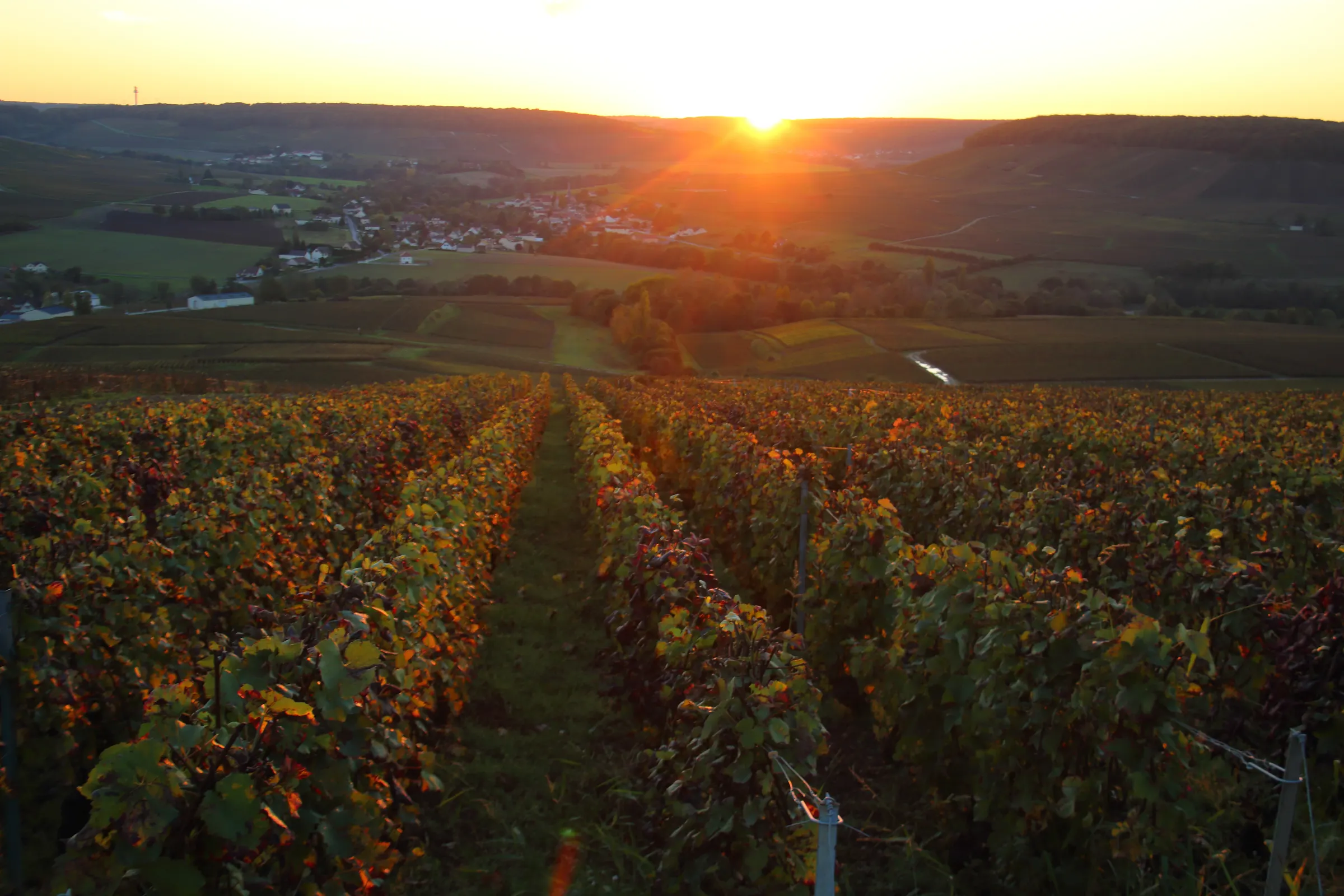
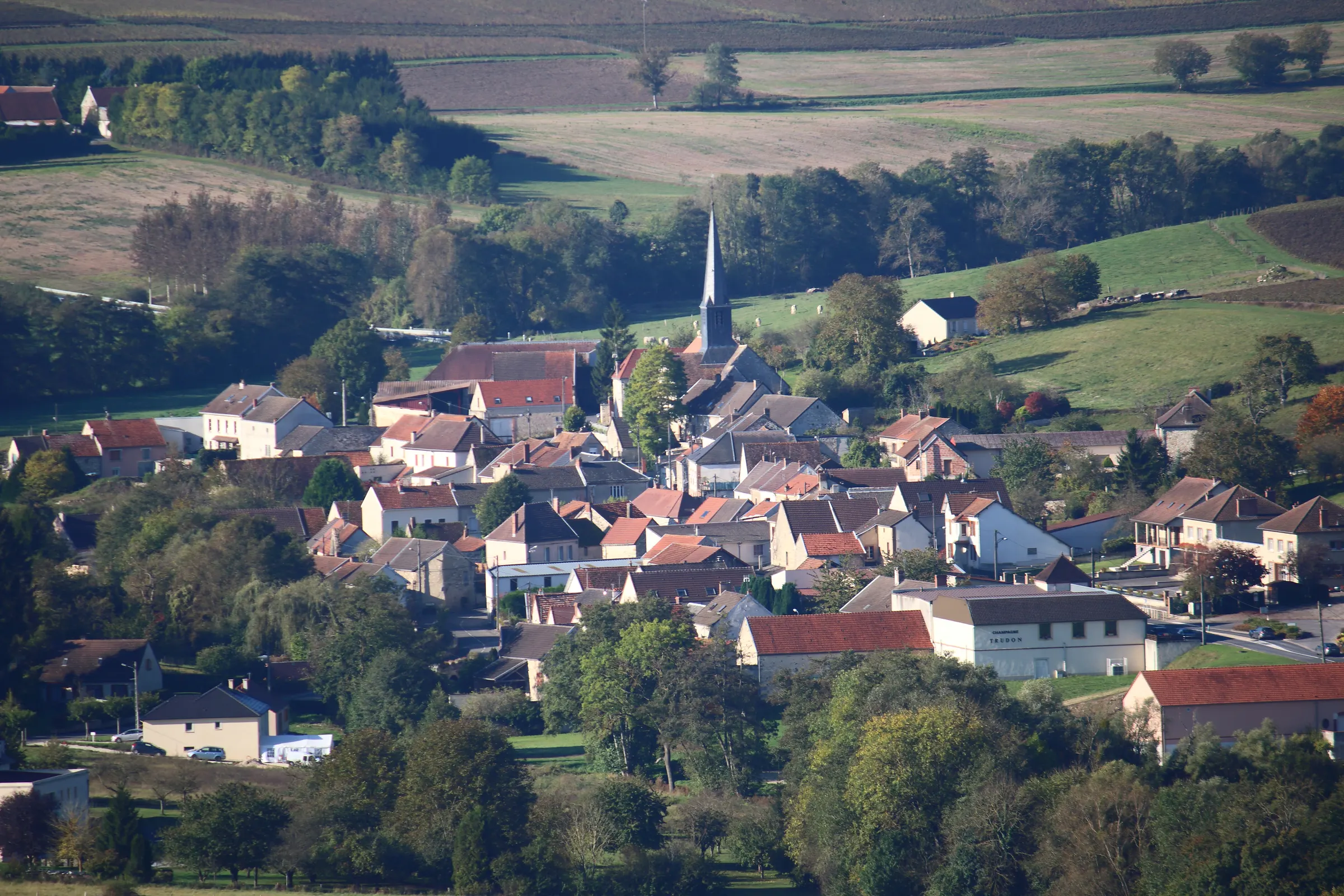
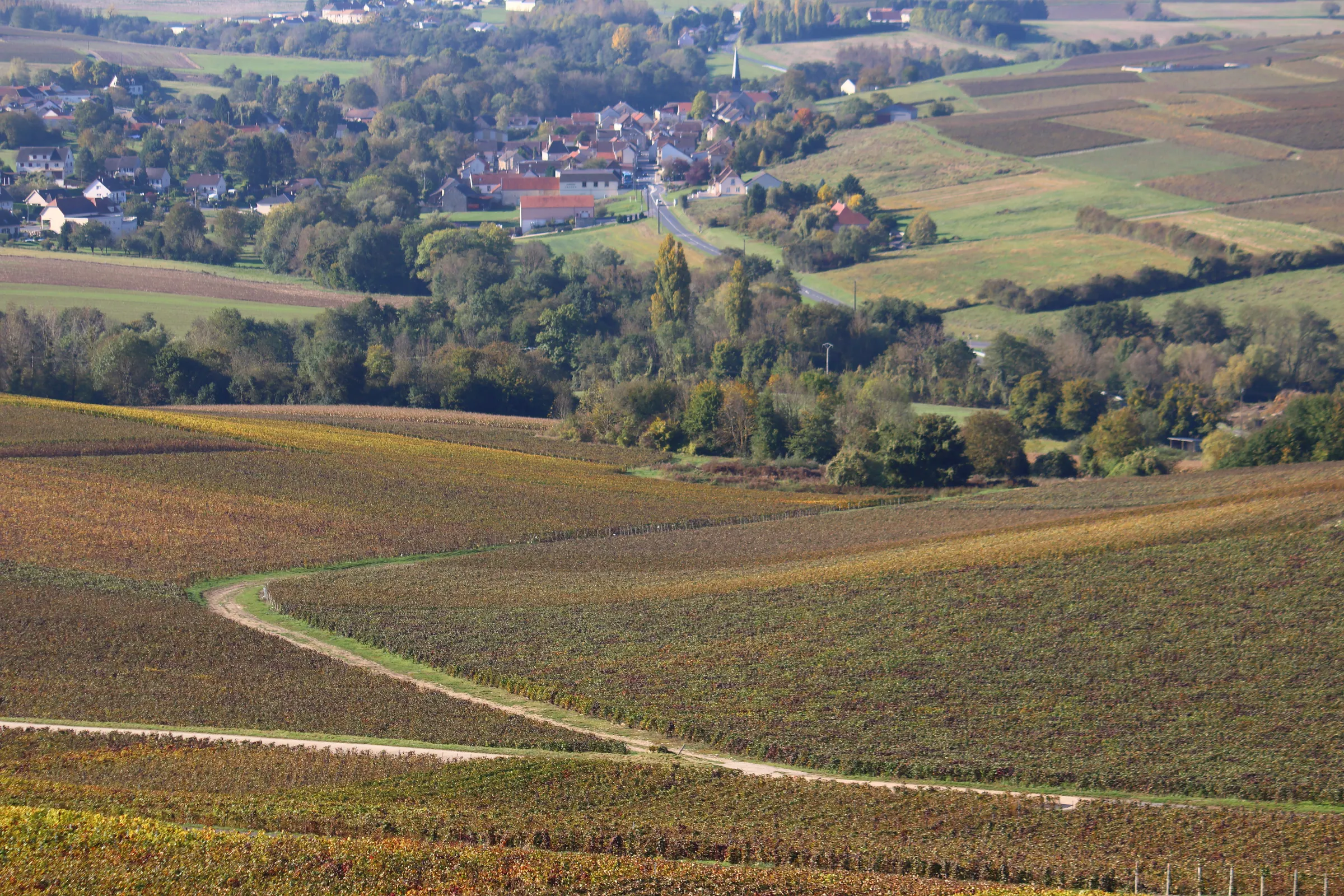
The historic hillsides of Hautvillers, Aÿ and Mareuil-sur-Aÿ
The historic hillsides run from Cumières to Mareuil-sur-Aÿ, south of the Montagne de Reims. The land once belonged to Hautvillers Abbey.
The villages are densely built. Houses and production buildings stand around courtyards, behind high walls and large double doors.
Bollinger, Ayala, Deutz and Collet are based in Aÿ, and Philipponnat and Billecart-Salmon in Mareuil-sur-Aÿ.
In Hautvillers, Dom Pérignon (1638–1715) worked at the abbey for almost fifty years. Between 1660 and 1700, the wine changed from still to sparkling under the direction of the abbey winery. Dom Pérignon is buried in the choir of the Saint-Sindulphe church, the former abbey church, which is free to enter.
The Saint-Nicaise hill in Reims
Champagne houses have stood on the Saint-Nicaise hill since the late 18th century. Ruinart moved there first, in 1768, followed by Veuve Clicquot, Pommery, Charles Heidsieck, Taittinger and Martel.
Under the hill lie the crayères, former chalk quarries that supplied stone for building Reims. From the 18th century they were converted into champagne cellars, and some are over 30 meters high.
Above ground, the site includes 39 hectares of parks and gardens and the Chemin Vert garden city, with the Church of Saint-Nicaise at its center.
The Avenue de Champagne and Fort Chabrol in Épernay
The Avenue de Champagne is 1.5 km long. The first champagne houses settled on it in the 18th century, and the chalk cellars and galleries beneath it, on several levels, span over 100 km.
Fort Chabrol, at 1 route de Mardeuil, is the former Moët & Chandon viticulture school and research center. Raoul Chandon de Briailles founded it to fight phylloxera, which reached the south of the region in 1888. The center grafted local grape varieties onto resistant American rootstocks. It became a Historic Monument in 2012.
Getting there
The fastest route from Paris is the direct TGV from Gare de l'Est to Reims, in 46 minutes. The direct train from Gare de l'Est to Épernay takes 1 hour 20 minutes, and the Avenue de Champagne is a 5-minute walk from Épernay station.
| Option | From | To | Time | Changes |
|---|---|---|---|---|
| TGV | Paris Gare de l'Est | Reims (Saint-Nicaise hill) | 46 minutes | Direct |
| Train | Paris Gare de l'Est | Épernay (Avenue de Champagne) | 1h20 | Direct |
| TER | Reims | Épernay, stopping at Aÿ-Champagne | 30 minutes | Direct |
| Car | Paris | Reims or Épernay | 1h30 | — |
The TER between Reims and Épernay takes 30 minutes and stops at Rilly-la-Montagne, Germaine, Avenay-Val-d'Or and Aÿ-Champagne. Pressoria is about a 15-minute walk from Aÿ-Champagne station. See Reims to Épernay for the line.
Hautvillers has no station. It is 6 km from Épernay, and a taxi takes 10 minutes.
By car, Reims is 1 hour 30 minutes from Paris, and Épernay 90 minutes via the A4. Philipponnat in Mareuil-sur-Aÿ is 6 km, about 10 minutes by car, from Épernay. The hillsides can be explored by car, by bicycle or on foot.
For train details, see Paris to Reims by train, Paris to Épernay by train and Champagne without a car.
When to go
Pommery opens 7 days a week all year, except December 25 and January 1–2. Moët & Chandon opens daily from 9:30 a.m. to 5 p.m., and Taittinger runs visits all year round.
Opening days change with the seasons at other houses:
- Veuve Clicquot opens 9:30 a.m. to 5:30 p.m., Tuesday to Sunday from April 7, every day from June 29 to August 30, and Wednesday to Sunday from November 4, 2026 to January 3, 2027.
- Mercier opens daily from April 6 to November 15, then Wednesday to Sunday from November 18 to December 27.
- Ruinart receives visitors from March 25 to December 29, 2026.
On the hillsides, Pressoria opens 9:30 a.m. to 6:30 p.m. from April 1 to October 31 and 10 a.m. to 6 p.m. from November 1 to March 31. It closes on Thursdays, January 1, May 1, December 25 and for the second half of January.
Billecart-Salmon runs guided tours Monday to Friday from October to March and Monday to Saturday from April to October. Philipponnat opens on Saturdays from May to September, except the first Saturday of each month.
The Saint-Sindulphe church in Hautvillers is open all year, from 9 a.m. to 4 p.m. every day from November 1.
Visiting the estates
On the Saint-Nicaise hill, the houses take bookings for cellar visits with a tasting.
- Pommery's guided visit goes down 116 steps into Gallo-Roman chalk pits 30 meters underground. The Brut Royal Visit lasts 45 minutes, with an audio app or a guide.
- Veuve Clicquot's tours start at its Visit Center, 1 rue Albert Thomas, go into its UNESCO-listed crayères and last 1 hour to 4 hours.
- Taittinger, at 9 place Saint-Nicaise, keeps its cellars 18 meters underground in Gallo-Roman chalk quarries, with the remains of the former Saint-Nicaise Abbey on the site. Visits last 35 to 55 minutes.
- Ruinart, at 4 rue des Crayères, takes 12 people per 2-hour visit. Its crayères lie about 40 meters below the surface, on two levels, with 8 kilometers of galleries.
Charles Heidsieck's crayères have more than 8 kilometers of galleries, but the house gives no public visit schedule. For more houses in the city, see Reims.
On the Avenue de Champagne, Moët & Chandon has 28 km of cellars. Visits without a booking are possible, but places are limited and the house recommends booking online. Its Terroir Treasures tour includes the vineyards of the private Fort Chabrol site.
Mercier, at 68 avenue de Champagne, takes every tour by driverless train through part of its 18 km of cellars, 30 meters below ground, dug in 1871. Boizel, at 46 avenue de Champagne, runs a 1 hour 30 minute Millésime tour of its cellar, winery and UNESCO-listed historic cellars, for groups of up to 12.
On the hillsides, Philipponnat, at 13 rue du Pont in Mareuil-sur-Aÿ, takes advance bookings only. Visits last 1 hour 30 minutes to 2 hours and include a tasting, in French, English or Italian.
Billecart-Salmon, at 40 rue Carnot in Mareuil-sur-Aÿ, takes visit requests through a form and replies by email with times and a price. It gives priority to professionals and loyal clients, takes no bookings more than 3 months ahead and accepts no requests from travel agencies or private drivers.
Champagne Collet in Aÿ runs a 30-minute tasting of 3 cuvées and a 45-minute tasting of 5 cuvées. You book through its online form, with slots at 10 a.m., 11 a.m., 2 p.m., 3 p.m. and 4 p.m., in French or English.
Pressoria, at 11 boulevard Pierre Cheval in Aÿ, pairs a self-guided permanent exhibition with a guided tasting of 2 champagnes or 2 grape juices. The exhibition includes the history of the Pommery pressing center. The last suggested start is 4:30 p.m. from April to October and 4 p.m. from November to March.
Official walks and viewpoints
The tourist office's guided walk of Aÿ, "Petite cité de caractère," meets at Place de la Libération and lasts about 60 minutes. It covers the Gothic church, private mansions and the Ayala, Bollinger and Deutz houses.
In Hautvillers, the tourist office's 60-minute walk "Sur les pas de Dom Pérignon" covers the founding of the abbey, the legend of Dom Pérignon, the wrought-iron signs and the UNESCO listing. It meets at the tourist office, 10 place de la République, and does not run on Sundays and Mondays.
Hautvillers has two viewpoints over the hillsides: the Marne Valley panoramic view at the Dom Pérignon site on rue de Cumières, with information terminals, and the Croix Joseph viewpoint on the D386 toward Saint-Imoges.
In Épernay, the Pierre Cheval viewpoint on Mont Bernon, at 208 meters, is up about 60 wooden steps from the Chemin de la Source. It looks over the Avenue de Champagne, the Marne, Fort Chabrol and the villages of Cumières, Hautvillers, Champillon and Damery. A tethered balloon in the Charles-de-Gaulle parking lot rises more than 150 meters.
What it costs
A visit with a tasting at the listed sites costs €18–260 ($19–281). Entry to the Saint-Sindulphe church is free.
- Pressoria: €18 ($19) for adults, €9.50 ($10) for children aged 6 to 17, free under 6.
- Collet: €25 ($27) for 3 cuvées, €40 ($43) for 5.
- Mercier: The Founder tour €25 ($27).
- Pommery: Brut Royal Visit €30 ($32) with the audio app, €36 ($39) guided.
- Veuve Clicquot: from €36 ($39) for the Brut Yellow Label tour to €260 ($281) for La Grande Dame.
- Taittinger: Instant Rosé €40 ($43).
- Boizel: Millésime tour €40 ($43).
- Moët & Chandon: The Imperial Moment €48 ($52), Terroir Treasures €235 ($254).
- Ruinart: €90 ($97) for adults, €50 ($54) for children aged 7 to 17.
- Philipponnat: The Art of Blending €170 ($184), Along the Marne €208 ($225), Clos des Goisses €210 ($227).
Billecart-Salmon sends its price in a proposal after your request.
The tourist office walk of Aÿ costs €9 ($10) per person, free under 16, with an optional glass of champagne at a winegrower for €5 ($5). The Hautvillers walk costs €75 ($81) for 1 to 8 people or €9 ($10) per person for 9 to 14, free under 16.
For booking terms at the houses, see Booking Champagne house visits.
Before you go
- Fort Chabrol is visible only from outside, and the former abbey of Saint-Pierre in Hautvillers is private property. Only its abbey church of Saint-Sindulphe is open.
- In high season the houses are in heavy demand, and the Reims tourist office says to book guided visits in advance.
- Pressoria closes on Thursdays and for the second half of January. Billecart-Salmon closes on Sundays and public holidays and does not accept children under 12.
Veuve Clicquot tickets carry no right of cancellation and cannot be exchanged or changed. Mercier does not sell same-day tours online; call +33 3 26 51 22 22.
Frequently asked questions
What are the three UNESCO sites in Champagne?
The historic hillsides of Hautvillers, Aÿ and Mareuil-sur-Aÿ, the Saint-Nicaise hill in Reims, and the Avenue de Champagne with Fort Chabrol in Épernay. They joined the World Heritage list together on July 4, 2015, as the Champagne Hillsides, Houses and Cellars.
Can I go inside Fort Chabrol?
No. The former Moët & Chandon viticulture school on route de Mardeuil in Épernay can be seen only from outside. Moët & Chandon's Terroir Treasures tour, at €235 ($254), takes in the vineyards of the private site.
Do I need a car to see all three ensembles?
The TGV reaches Reims from Paris Gare de l'Est in 46 minutes, and the TER between Reims and Épernay stops at Aÿ-Champagne. Hautvillers has no station, and a taxi from Épernay takes 10 minutes. The hillsides can also be explored by bicycle or on foot.
Do I need to book a house visit?
Pommery, Veuve Clicquot, Taittinger and Ruinart take bookings for their cellar visits, and Philipponnat takes advance bookings only. Moët & Chandon accepts visitors without a booking, but places are limited and the house recommends booking online.