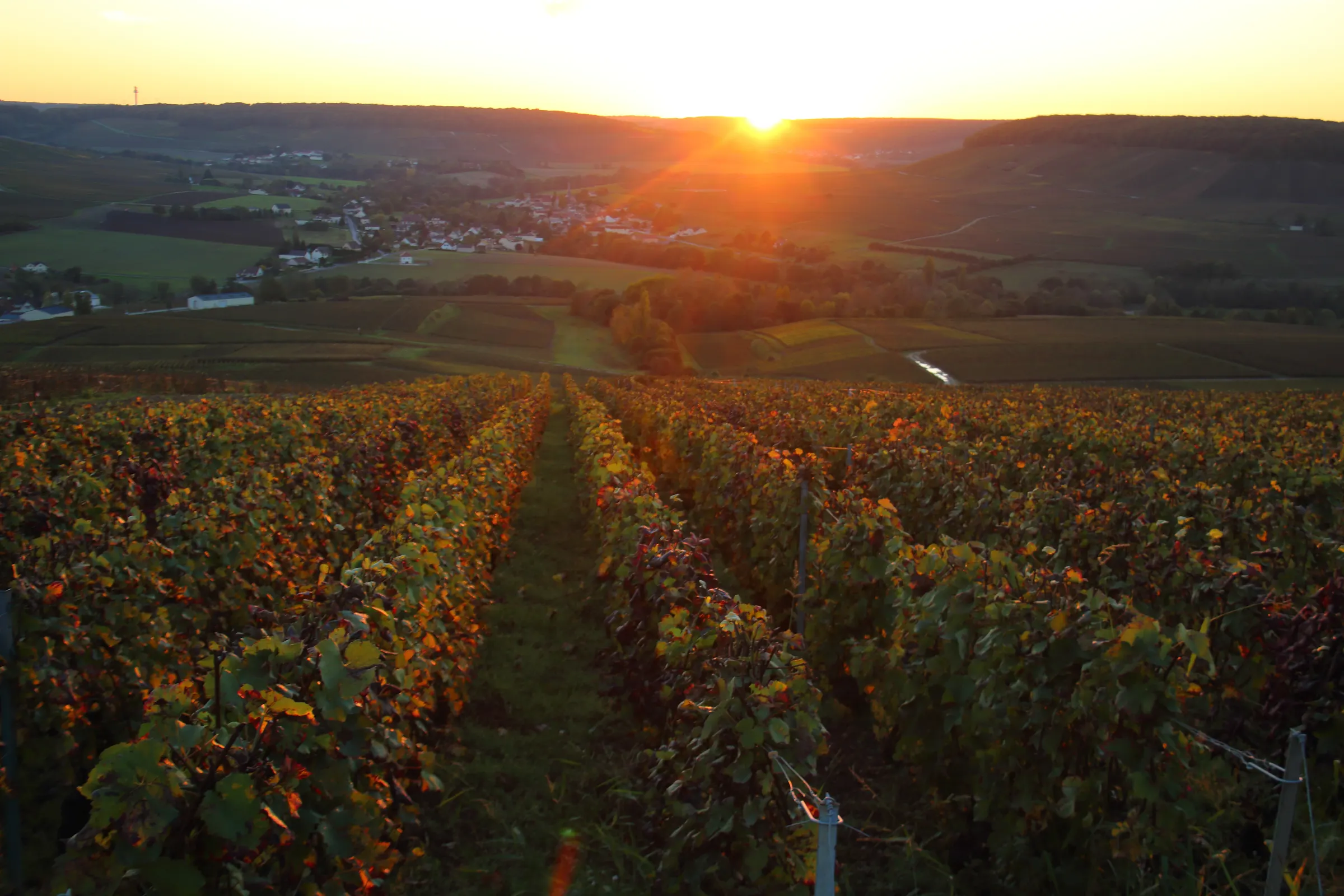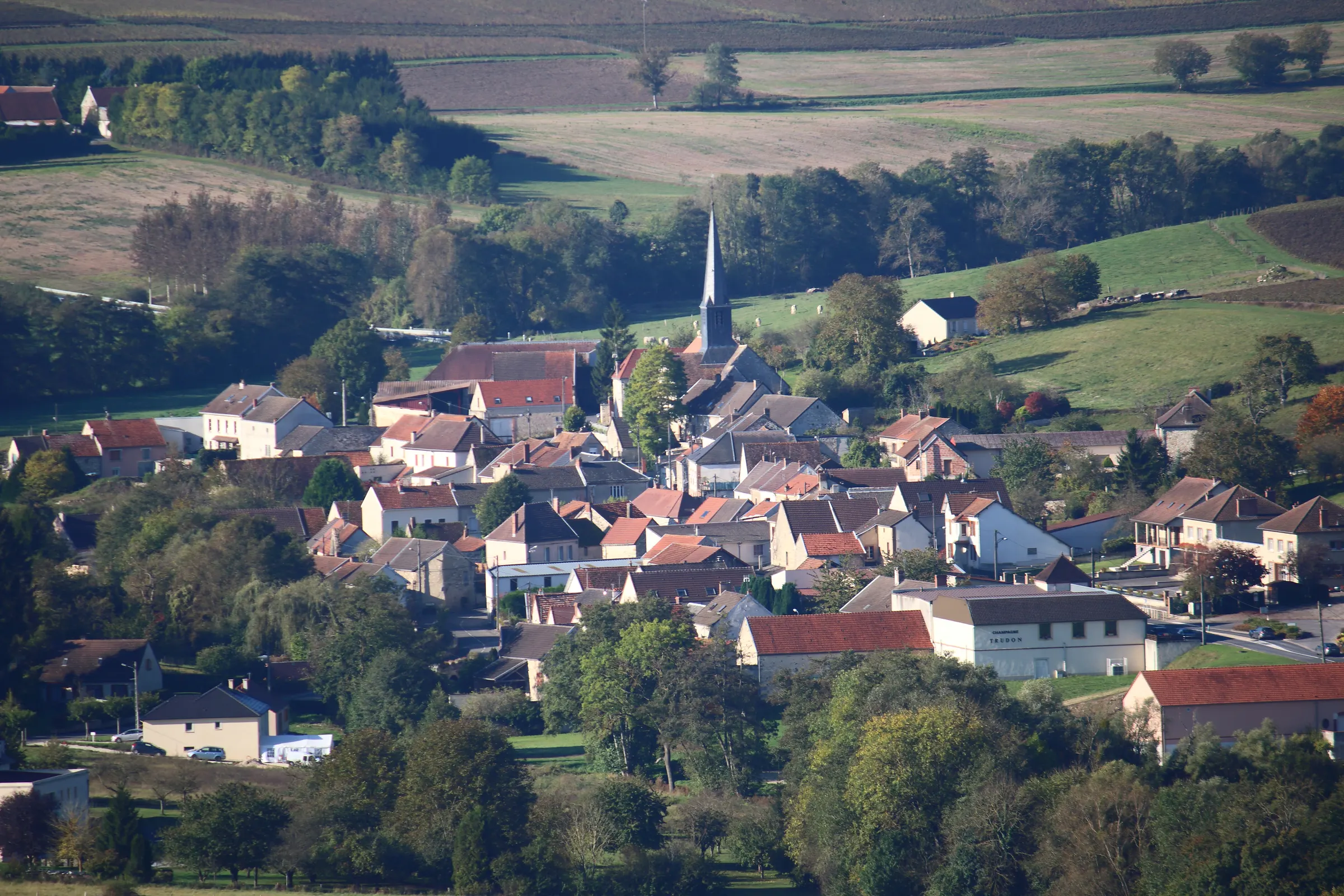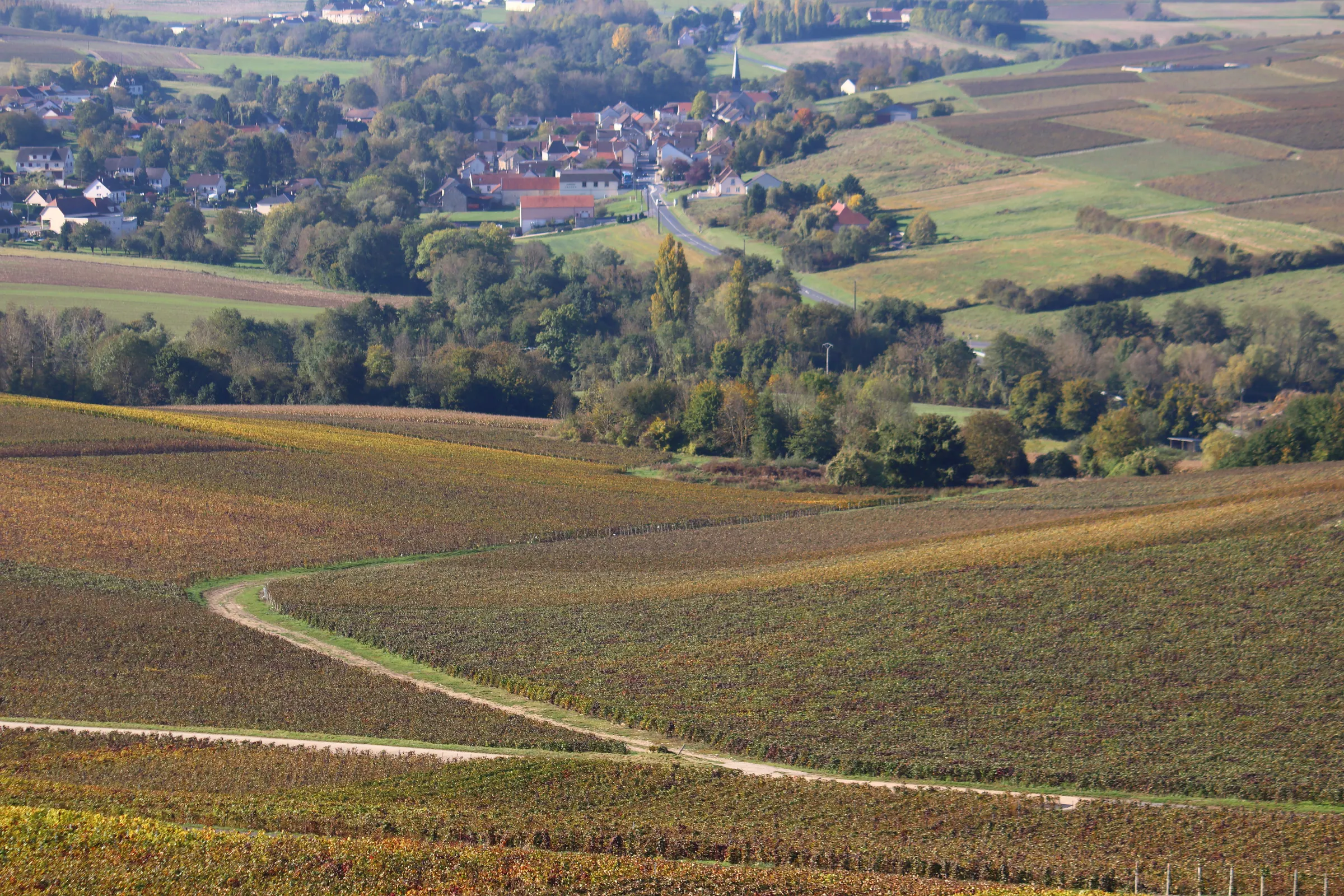
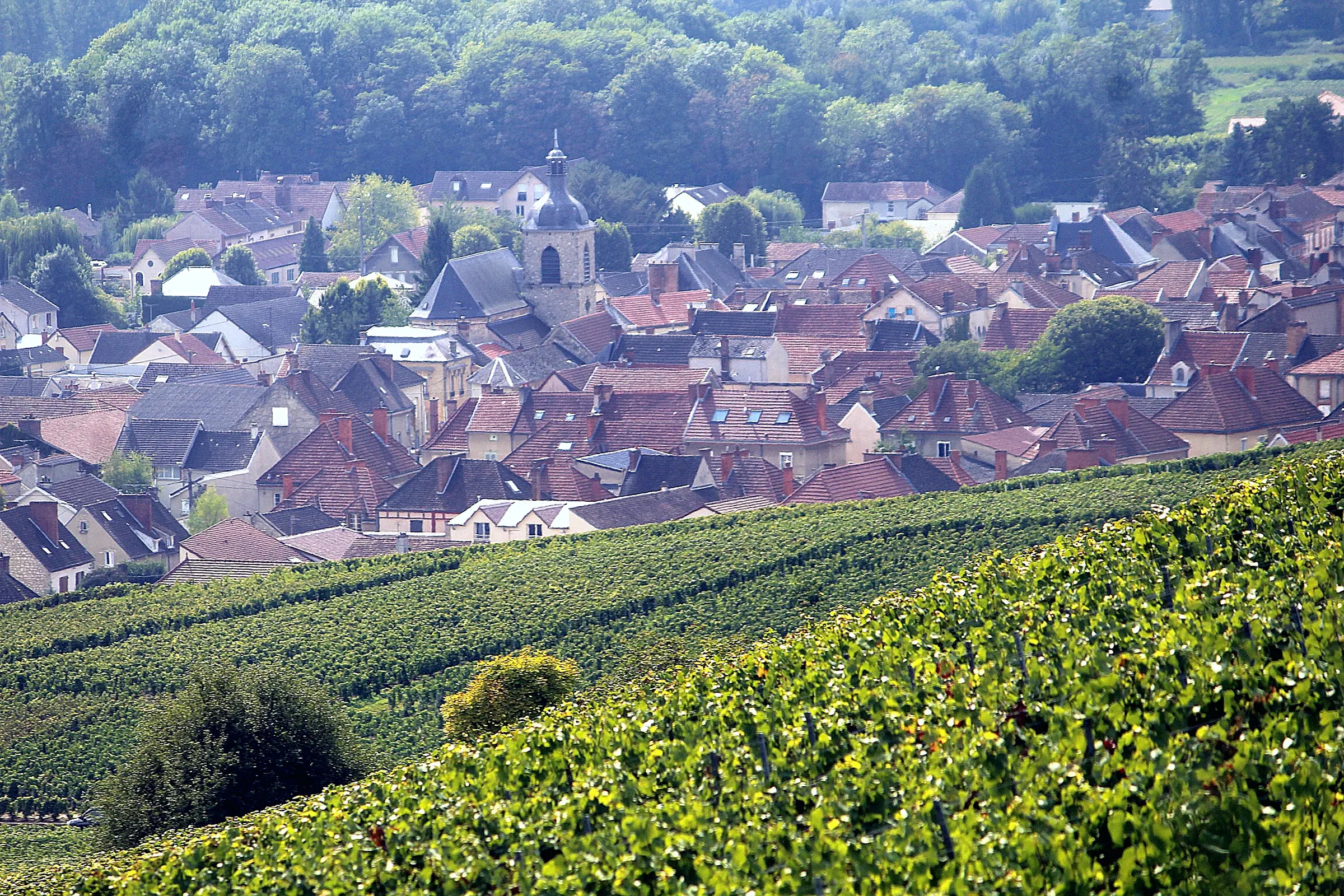
The story of Dom Pérignon and the Hautvillers abbey is set in Hautvillers, a village 6 km from Épernay. Dom Pierre Pérignon managed the abbey's property for 47 years and is buried in its church.
The abbey church of Saint-Sindulphe, with his tomb, is open and free to enter.
This page covers the history of the abbey and the monk, the church, the tourist office's guided walks, the village's growers, and how to reach Hautvillers from Paris.
The abbey and Dom Pérignon
The Benedictine abbey of Saint-Pierre d'Hautvillers was founded around 650 by Saint Nivard, Bishop of Reims. The founding legend says he saw a dove land on a beech tree and built a church on that spot. The abbey became a major pilgrimage destination and reached its peak in the 17th century.
Pierre Pérignon was baptized in Sainte-Menehould on January 5, 1639. He came to the abbey in 1668, aged 29, as procurator, the monk in charge of its property. He held the post for 47 years, until his death on September 24, 1715.
The Comité Champagne, the region's interprofession, credits him with being one of the first to see that different wines and different crus could complement each other. He blended them in a much more carefully considered way; before him, blending was a fairly random process.
The Comité Champagne dates the turning point in Champagne winemaking to 1670–1720, when sparkling wine became a deliberate choice in the region. Cork stoppers reached Champagne in 1685. Other monks shaped the wine too, among them Frère Oudart of Saint-Pierre-aux-Monts Abbey in Pierry, and the archbishop of Reims and several abbeys were major vineyard owners.
In the 19th century, Dom Pérignon became known as "the spiritual father of champagne" and Hautvillers as "the birthplace of champagne."
The abbey was abandoned during the Revolution. It came back to life in 1823, when Pierre-Gabriel Chandon acquired the properties.
The abbey church and the village
The former abbey church of Saint-Sindulphe is the only visible remaining part of the abbey. Dom Pérignon is buried in its choir, and the church also holds relics of Saint Helena, mother of Constantine the Great. Free toilets are at the church entrance.
Mass is held on the third Sunday of odd-numbered months, except July.
A bronze statue of Dom Pierre Pérignon by the Châlons sculptor Juan Carlos Carrillo stands in the Pierre Cheval park. It was inaugurated in June 2022, is almost 3 meters tall and weighs 700 kg. Its giant bottle holds the contents of 360 bottles of champagne.
The Belvédère Dom Pérignon looks out over the Marne Valley. The Croix Joseph viewpoint, toward Saint-Imoges, gives a second panorama.
The name Hautvillers means "High village," from the old name Altum Villare. In all, 140 wrought-iron signs hang from its houses. The tourist office sells a sign guide for €1 ($1), in French and English, that leads you to 28 of them.
The hillside vineyards of Hautvillers, Aÿ and Mareuil-sur-Aÿ are one of the three ensembles of the Champagne Hillsides, Houses and Cellars, added to the UNESCO World Heritage list on July 4, 2015. The other two are the Saint-Nicaise hill in Reims and the Avenue de Champagne and Fort Chabrol in Épernay.
Hautvillers is also a stop on the Comité Champagne's Vallée de la Marne wine trail, which runs from Épernay to Château-Thierry through Champillon, Hautvillers and Cumières.
Guided walks and the show
The tourist office, at 10 place de la République, runs "Sur les pas de Dom Pérignon," a walk of about 60 minutes. It covers the founding of the abbey, the legend of Dom Pérignon, the wrought-iron signs and the UNESCO listing. Guides speak French, English and German, and the walk does not run on Sundays or Mondays.
The walk costs €75 ($81) for a group of 1 to 8 people, or €9 ($10) per person for 9 to 14. Groups of 15 to 25 pay €130 ($140), or €165 ($178) on Sundays and public holidays. Under-16s go free, and an optional tasting at a village winegrower adds €5 ($5) per person.
The tourist office's second walk, "Le nez en l'air," follows the wrought-iron signs and includes a visit to the abbey church where Dom Pérignon rests. It starts at €12 ($13).
L'Héritage Dom Pierre Pérignon is an immersive theater show set in Hautvillers in 1681, with 10 actors and up to 60 spectators. It runs from October 30 to November 14, 2026, meets at the Église Saint-Sindulphe and lasts 1 hour 20 minutes. Tickets cost €45 ($49), with a glass of champagne. Arrive at least 15 minutes early.
Getting there
Trains leave from Paris Gare de l'Est. The TGV reaches Reims in 45 minutes, and a TER connection to Épernay takes 25 minutes more. The direct train from Gare de l'Est to Épernay takes 1 hour 20 minutes.
Hautvillers has no train station. A taxi from Épernay takes 10 minutes, and from Reims 30 minutes. The other stops nearby are on the TER line between Reims and Épernay: Rilly-la-Montagne, Germaine, Avenay-Val-d'Or and Aÿ-Champagne.
| Option | From | Time | Changes |
|---|---|---|---|
| TGV, then TER | Paris Gare de l'Est via Reims | 45 min + 25 min | 1 |
| Direct train | Paris Gare de l'Est to Épernay | 1h20 | 0 |
| Taxi | Épernay | 10 min | — |
| Taxi | Reims | 30 min | — |
| Car | A4 exit 23, then 20 km | — | — |
By car, leave the A4 at exit 23 and take the D951 toward Épernay, then the D1 toward Hautvillers, 20 km in all. From exit 21, take the D980 toward Reims and then the D386 toward Chaumuzy, 28 km. Paris-Charles de Gaulle airport is 132 km away and Paris-Orly 145 km.
Park at the free Jard Kiedrich parking lot, which takes cars, motorhomes and buses, or along Avenue de Chandon, and walk through the village. The Circuit des moines walk starts from Jard Kiedrich and covers 3 km in 1 hour.
For the train options in detail, see Paris to Épernay by train and Champagne without a car.
When to go
The abbey church is open all year. Until October 31, 2026, it opens Monday to Sunday from 9 a.m. to 6 p.m., except Wednesday, from 9 a.m. to 4:15 p.m. From November 1, it opens every day from 9 a.m. to 4 p.m.
The tourist office's high season runs from April 15 to October 31. It opens Monday to Saturday from 9:30 a.m. to 1 p.m. and 1:30 p.m. to 5:30 p.m., and on Sundays and public holidays from 10 a.m. to 4 p.m.
From November 1 to April 14, the office opens Monday to Saturday from 9:30 a.m. to 1 p.m. and 1:30 p.m. to 5 p.m., and closes on Sundays.
Among the growers, Champagne G. Tribaut opens from March 1 to December 31, 2026, and Champagne Joseph Desruets from February 1 to December 22, 2026. The cooperative and Champagne J-M. Gobillard & Fils receive visitors all year.
The village holds a comic book festival in April and takes part in the European Heritage Days in September.
Visiting the estates
Growers in the village receive visitors in their own cellars.
Le Berceau du Champagne is the Coopérative des Vignerons d'Hautvillers, on Chemin des Garennes. It was founded in 1931 and its 175 members farm 72 hectares. It opens Monday to Friday from 8 a.m. to noon and 1:30 p.m. to 5:30 p.m., and Saturday from 9 a.m. to noon. Staff speak English and French.
Champagne J-M. Gobillard & Fils, at 38 rue de l'Église, runs a visite gourmande: a guided walk of about 2 km through the vineyard from its tasting room, then a tasting of four cuvées. It opens from 10 a.m. to 12:30 p.m. and 2 p.m. to 5:30 p.m.: every day, public holidays included, from June 1 to September 30, and Friday to Sunday from March 1 to May 31 and from October 1 to December 30. In January and February it opens on Saturdays. On the other days, visits are by reservation only.
Champagne G. Tribaut, at 88 rue d'Eguisheim, opens every day from 9 a.m. to noon and 1:30 p.m. to 5:30 p.m. A visit lasts about 30 minutes, in German, English or French. Groups must book at least 3 weeks ahead.
Champagne Joseph Desruets, at 85 rue de Bacchus, offers a tasting in its caveau or a visit of its press with a tasting. Visits last about 45 minutes and run in English. It opens Monday, Tuesday, Thursday, Friday and Saturday from 10 a.m. to noon and 2 p.m. to 5 p.m.
Champagne Bliard-Labeste, at 167 rue des Buttes, runs Go Champagne: a tour of the Hautvillers vineyards by van with a winegrower, with a tasting. The tour with a cellar visit runs only on Monday to Saturday mornings. Book ahead, about 48 hours in advance.
In Épernay, Moët & Chandon runs cellar tours on the Avenue de Champagne from 9:30 a.m. to 5 p.m. daily. Visits without a booking are possible, but places are limited and the house recommends booking online. Bring warm clothing for the cellars.
Spit if you are driving, or choose a designated driver.
What it costs
Tastings in Hautvillers run €5–60 ($5–65), the top end being a vineyard tour with a cellar visit.
At Champagne G. Tribaut, a tasting of three samples of your choice costs €5–15 ($5–16). At Gobillard, a tasting of three cuvées costs €5 ($5), a flute of Brut tradition €3 ($3) and the visite gourmande €25 ($27). Groups of 12 or more pay €8 ($9) a head.
At Le Berceau du Champagne, three tastings start at €10 ($11) and a visit with three tastings at €25 ($27). The child rate, with the visit and a fruit juice, is €8 ($9).
At Joseph Desruets, a tasting of 2 to 3 cuvées costs €15–25 ($16–27), and the press visit with a tasting €25–35 ($27–38). A visit and tasting with sabrage costs €18–35 ($19–38).
Bliard-Labeste charges €40 ($43) per person for the vineyard tour with a tasting and €60 ($65) with the cellar visit. At Moët & Chandon in Épernay, The Imperial Moment cellar tour, with Moët Impérial and Rosé Impérial, costs €48 ($52) and lasts 1 hour 30 minutes.
Before you go
- The former abbey of Saint-Pierre is private property and cannot be visited. Only the abbey church, with Dom Pérignon's tomb, is open.
- The church closes early, at 4 p.m., on Friday, October 30, and is closed on December 25 and January 1, 2027.
- Champagne Joseph Desruets closes on Wednesdays and Sundays.
The tourist office is on Place de la République, phone +33 (0)3 26 57 06 35. Call it to book the guided walks.
For the rest of the region, see the Champagne guide, Aÿ and booking champagne house visits.
Frequently asked questions
Can I visit the Hautvillers abbey where Dom Pérignon lived?
No. The former abbey of Saint-Pierre is private property and is closed to visitors. You can enter the abbey church of Saint-Sindulphe next to it, free of charge, where Dom Pérignon is buried in the choir and relics of Saint Helena are kept.
Where is Dom Pérignon buried?
Dom Pierre Pérignon, who died on September 24, 1715, is buried in the choir of the Saint-Sindulphe church in Hautvillers, the former abbey church. Until October 31, 2026, it opens from 9 a.m. to 6 p.m., with a 4:15 p.m. close on Wednesdays.
How do I get to Hautvillers from Épernay?
Hautvillers is 6 km from Épernay and has no train station. A taxi from Épernay takes 10 minutes. By car, park at the free Jard Kiedrich parking lot or along Avenue de Chandon and walk into the village.
Is there a guided tour about Dom Pérignon in Hautvillers?
Yes. The tourist office runs "Sur les pas de Dom Pérignon," a walk of about 60 minutes in French, English or German, covering the abbey's founding and the Dom Pérignon legend. It costs €75 ($81) for 1 to 8 people, with an optional €5 ($5) grower tasting.