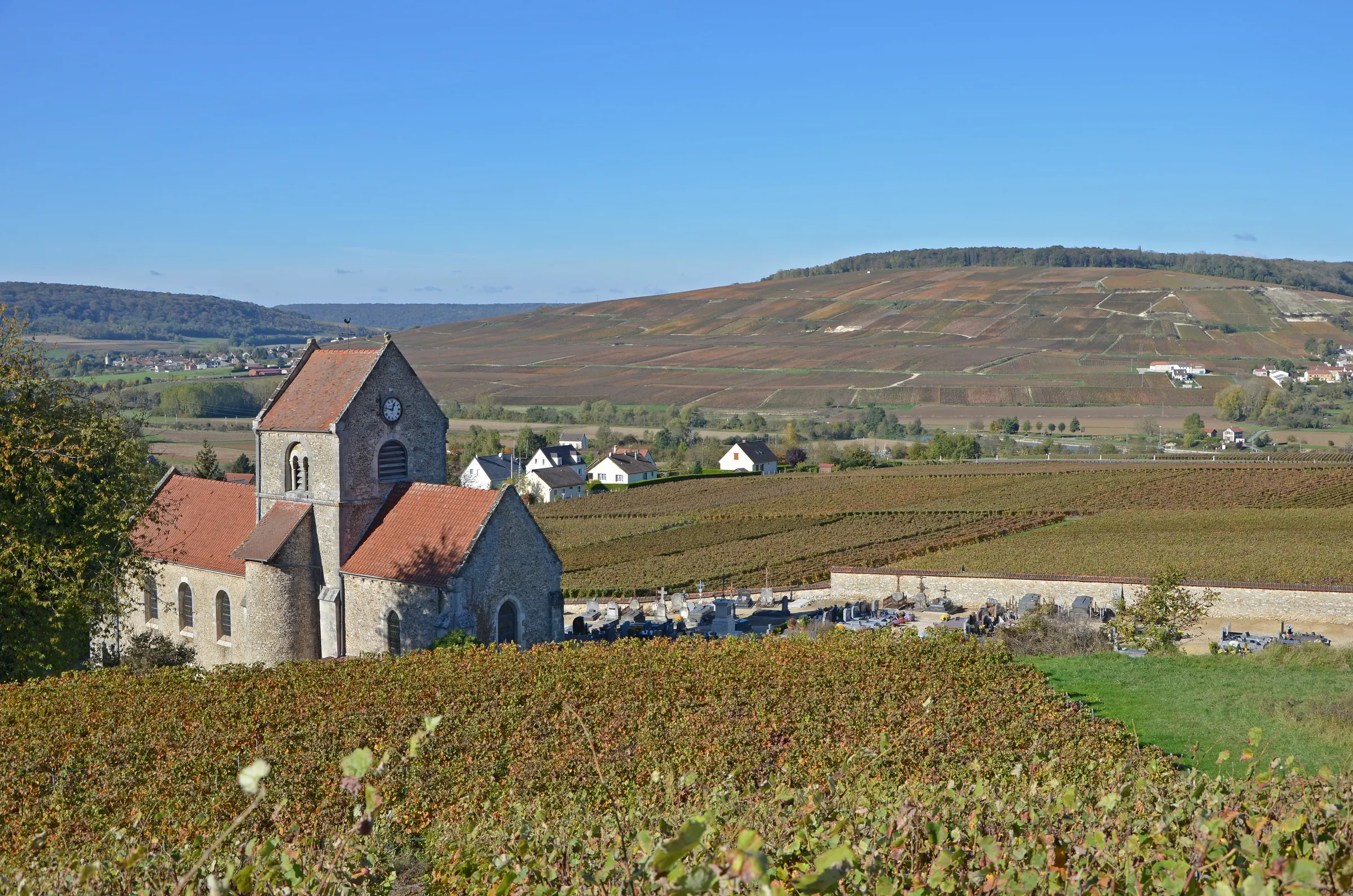
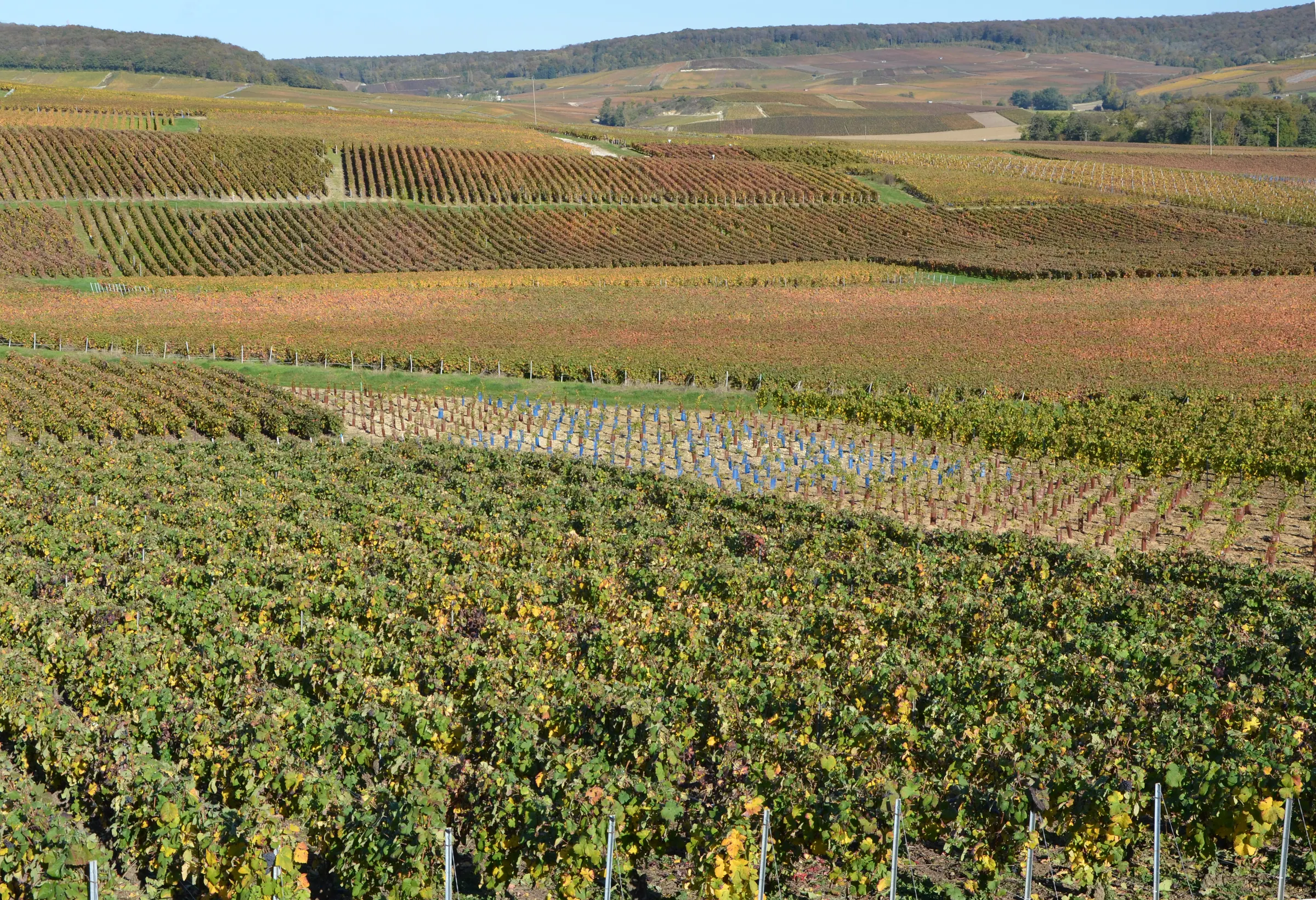
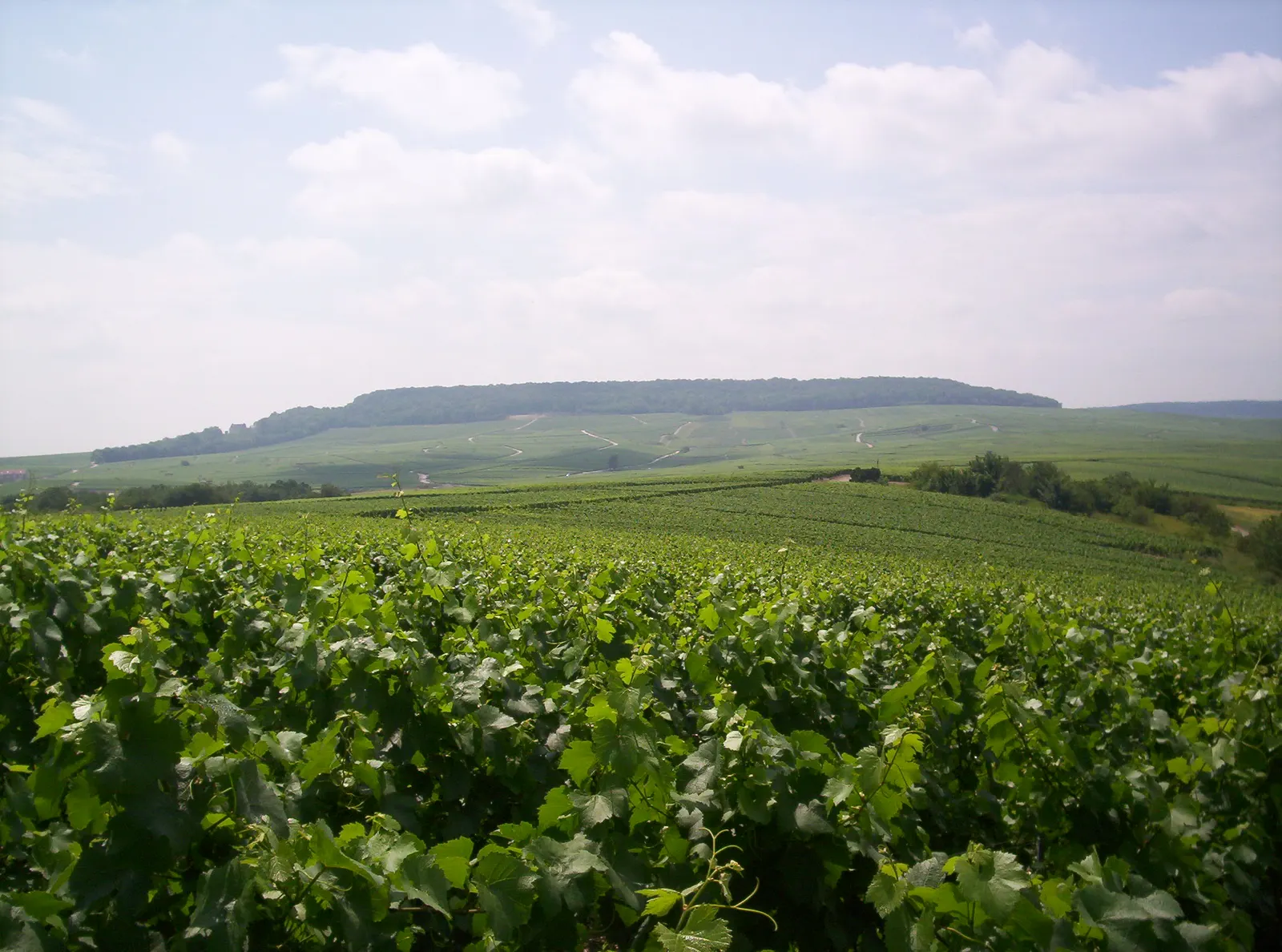
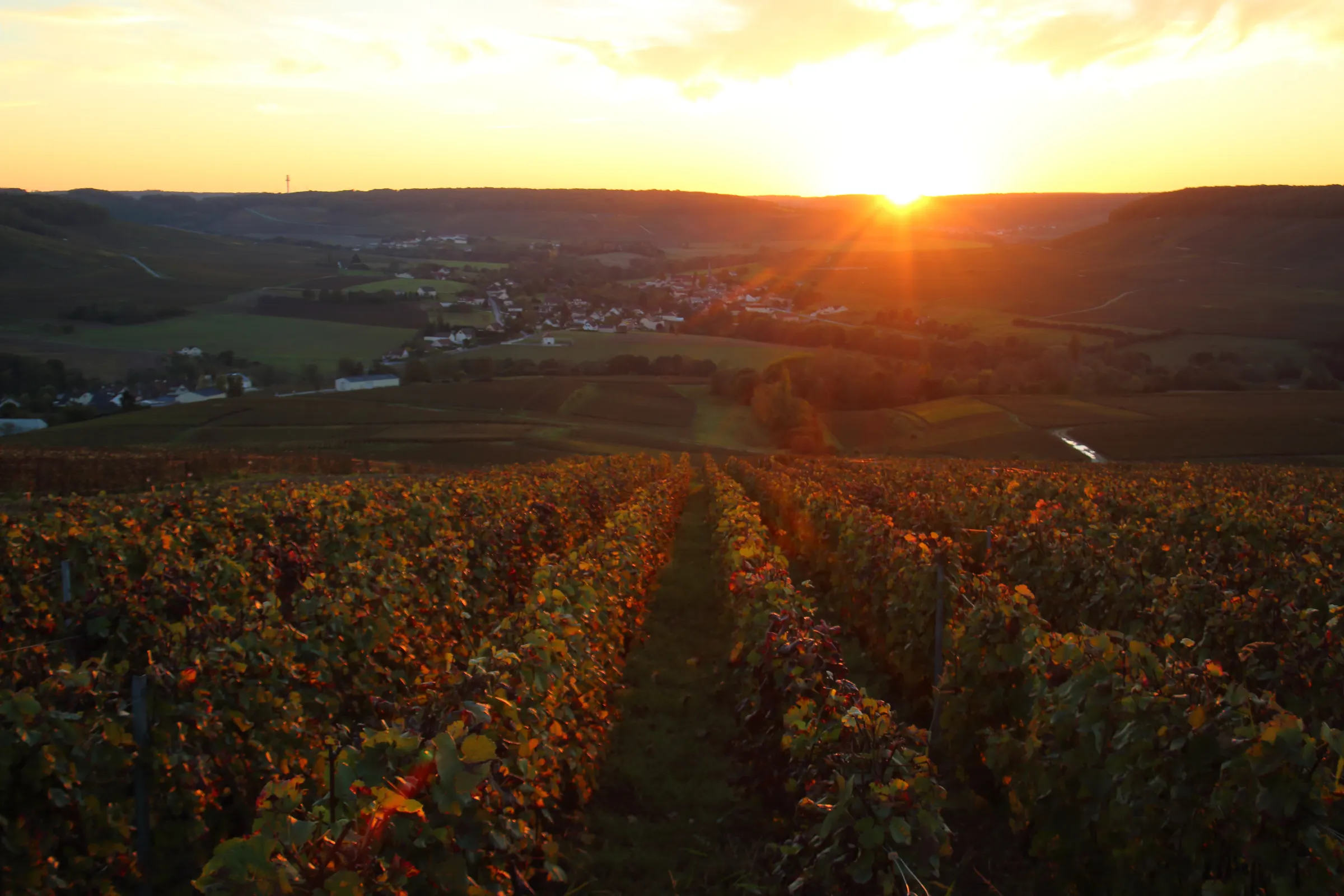
The Vallée de la Marne follows the river west from Aÿ, near Épernay, for nearly 100 km. Its wine is Meunier country, grown on north-facing clay-marl slopes.
The wine
The Vallée de la Marne is one of four main wine-growing sub-regions in Champagne, alongside Montagne de Reims, the Côte des Blancs and the Côte des Bar. It is the part of Champagne to know for Meunier. The grape makes up just over 30% of Champagne's roughly 34,000 hectares, and about 70% of it grows in the Marne Valley.
The grape mix changes as you travel along the river. Near Épernay the vines are mainly pinot noir. Moving west, Meunier becomes the dominant grape. It buds later than pinot noir, so it is less prone to spring frost damage in this cooler valley.
The vineyards follow the Marne for nearly 100 km, from Aÿ towards Château-Thierry and beyond, on north-facing slopes. The soils are mainly clay-limestone and tend towards marl. The area crosses three départements, Marne, Aisne and Seine-et-Marne, so it is a long strip of vineyard along the river rather than one compact block.
Aÿ is a Grand Cru village and the gateway to the valley from Épernay. For scale, the whole Champagne appellation covers some 34,300 hectares and 319 villages. Champagne's hillsides, houses and cellars were added to the UNESCO World Heritage list on July 4, 2015.
Visiting
Base yourself in Épernay, the station for the eastern end of the valley, and work outward from there. The TER from Paris Gare de l'Est takes 1 hour 20 minutes. The Épernay tourist office is under 10 minutes on foot from the station, so it makes an easy first stop when you arrive.
Aÿ is the natural first village to visit, as the gateway to the valley from Épernay. Hautvillers and Cumières are also Marne Valley villages, and both are worth placing on your map when you plan your days. Because the vineyards run so far along the river, pick one stretch rather than trying to cover the whole valley in a day.
Fees, opening days and booking rules differ from one estate to the next, so ask the estate or the Épernay tourist office about them before you set out.
If you taste at more than one cellar in a day, spit rather than swallow and nominate a designated driver. Work out how you will get between villages before you leave, since the vineyards stretch along the river for nearly 100 km.