This guide to Saint-Émilion or Médoc sets the two Bordeaux vineyard areas side by side. Saint-Émilion is a medieval town, and its wine landscape, the Jurisdiction of Saint-Émilion, is on the UNESCO World Heritage List. The Médoc covers more than 16,000 hectares of vines on the left bank of the Gironde estuary.
Below are the wine of each area, the villages, the trains and roads from Bordeaux, opening days, how the estates take visitors and what visits cost. For the town pages, see Saint-Émilion, Pauillac and Margaux.
The wine in each area
Saint-Émilion
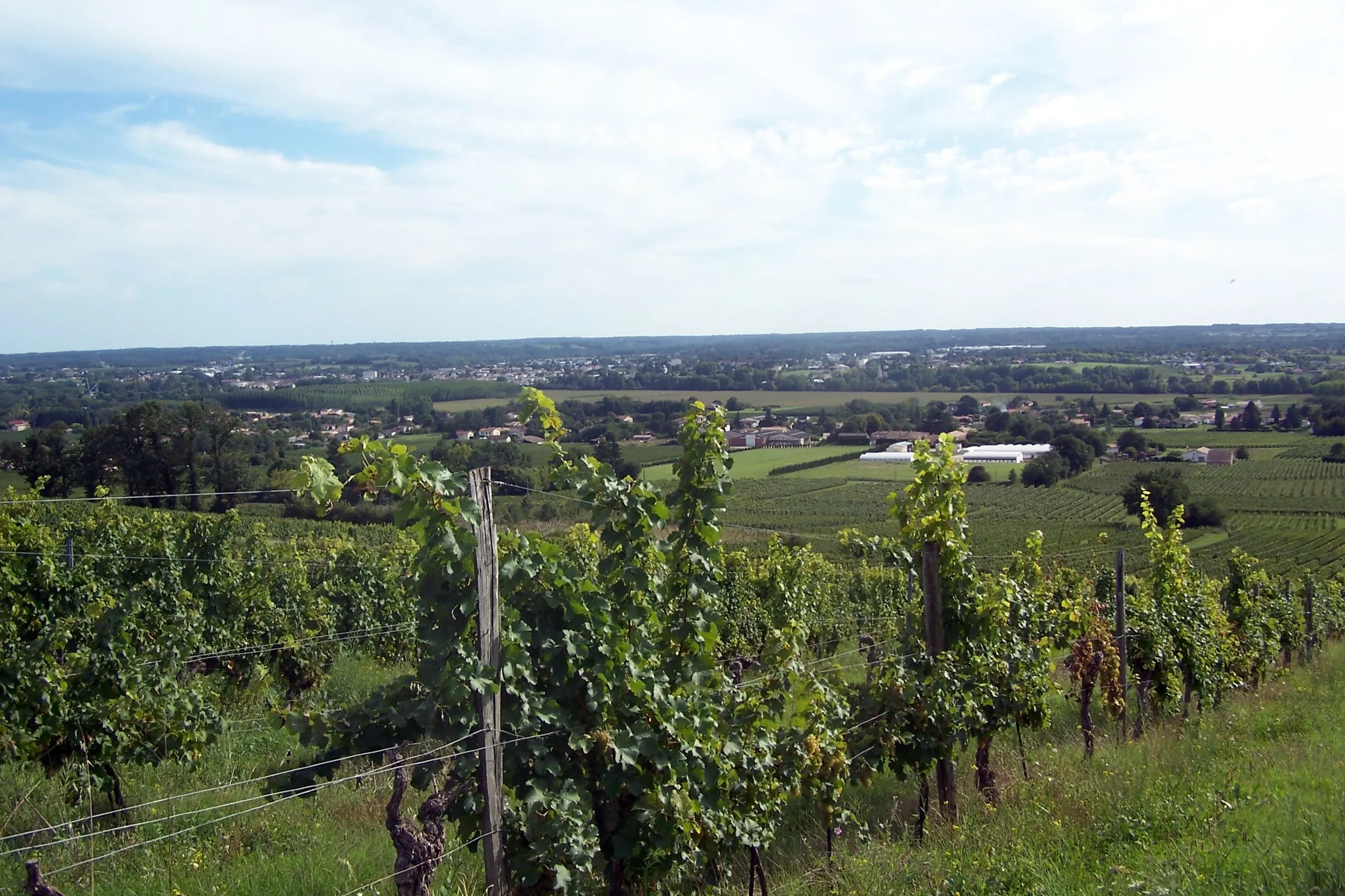
The Saint-Émilion and Saint-Émilion Grand Cru appellations make red wine only. They cover 5,400 hectares over the 8 towns of the Jurisdiction of Saint-Émilion and part of Libourne.
The vines are mostly merlot, blended with cabernet franc or cabernet sauvignon, with malbec in smaller proportions. The soils mix limestone, clay-limestone, sand and gravel. The average estate covers 8 hectares, and more than 800 wineries make these two appellations.
The Saint-Émilion Grand Cru classification dates from 1955 and is re-examined every 10 years. It has three ranks: Grand Cru Classé, Premier Grand Cru Classé and Premier Grand Cru Classé A. The 2022 classification covers 85 properties: 2 Premier Grand Cru Classé A, 12 Premier Grand Cru Classé and 71 Grand Cru Classé.
Médoc
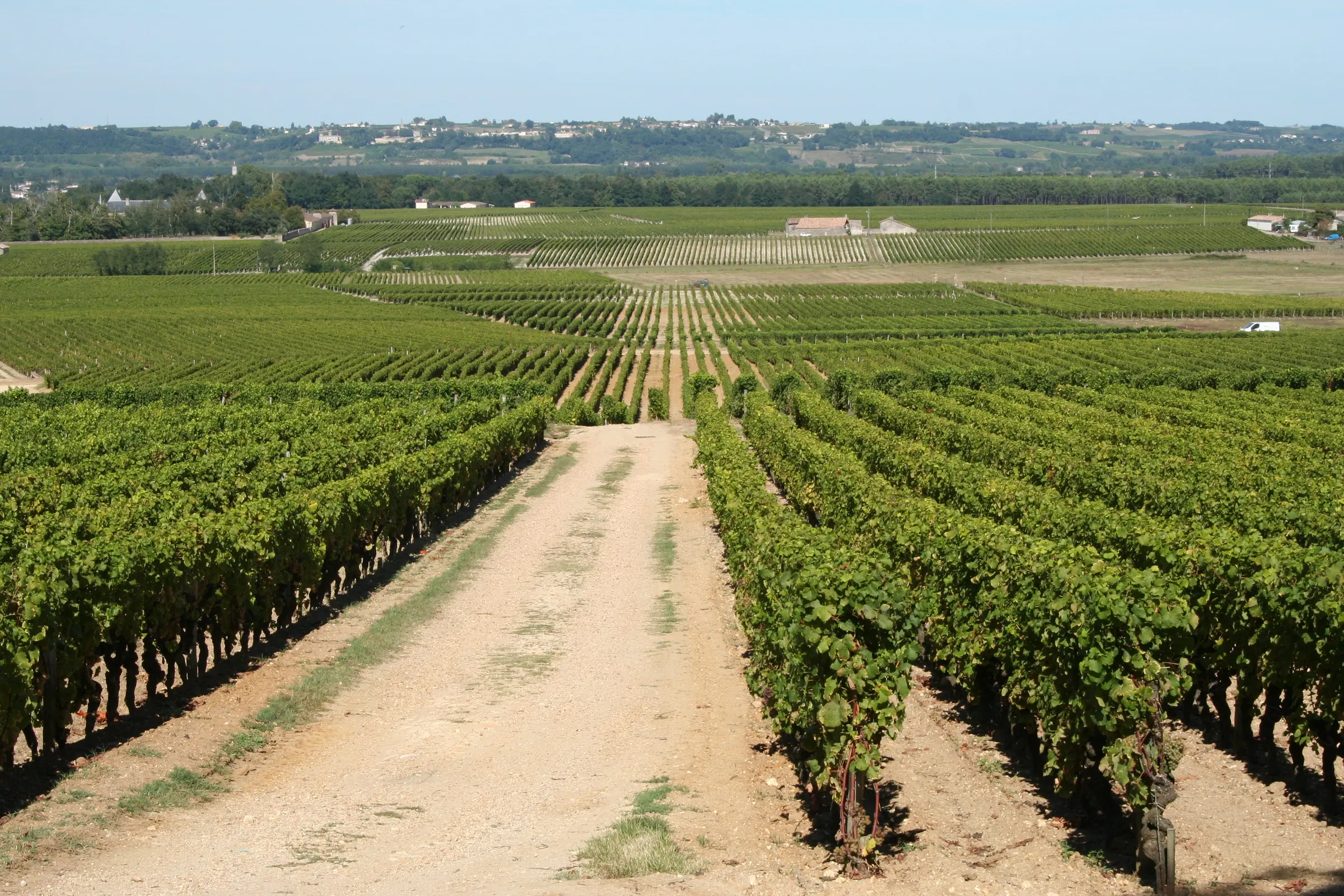
The Médoc is about 15% of the Bordeaux vineyard, with 8 AOCs: two regional ones, Haut-Médoc in the south and Médoc in the north, and six communal ones, Margaux, Saint-Julien, Pauillac, Saint-Estèphe, Listrac and Moulis.
Margaux sits on gravel hillsides. Saint-Julien grows cabernet sauvignon on homogeneous gravel, and more than 90% of the AOC is Grands Crus Classés. Saint-Estèphe, in the north, sits on gravel and clay. Listrac grows merlot on gravel mixed with clay-limestone, and merlot also dominates in the Médoc AOC.
The Médoc has three official classifications: the Grands Crus Classés of 1855, the Crus Bourgeois and the Crus Artisans. Many estates have no classification, and the area also has several cooperative wineries. Lafite-Rothschild, Latour, Margaux and Mouton-Rothschild are among the 60 listed Grands Crus of the Médoc on the 1855 list.
The villages and the landscape
Saint-Émilion
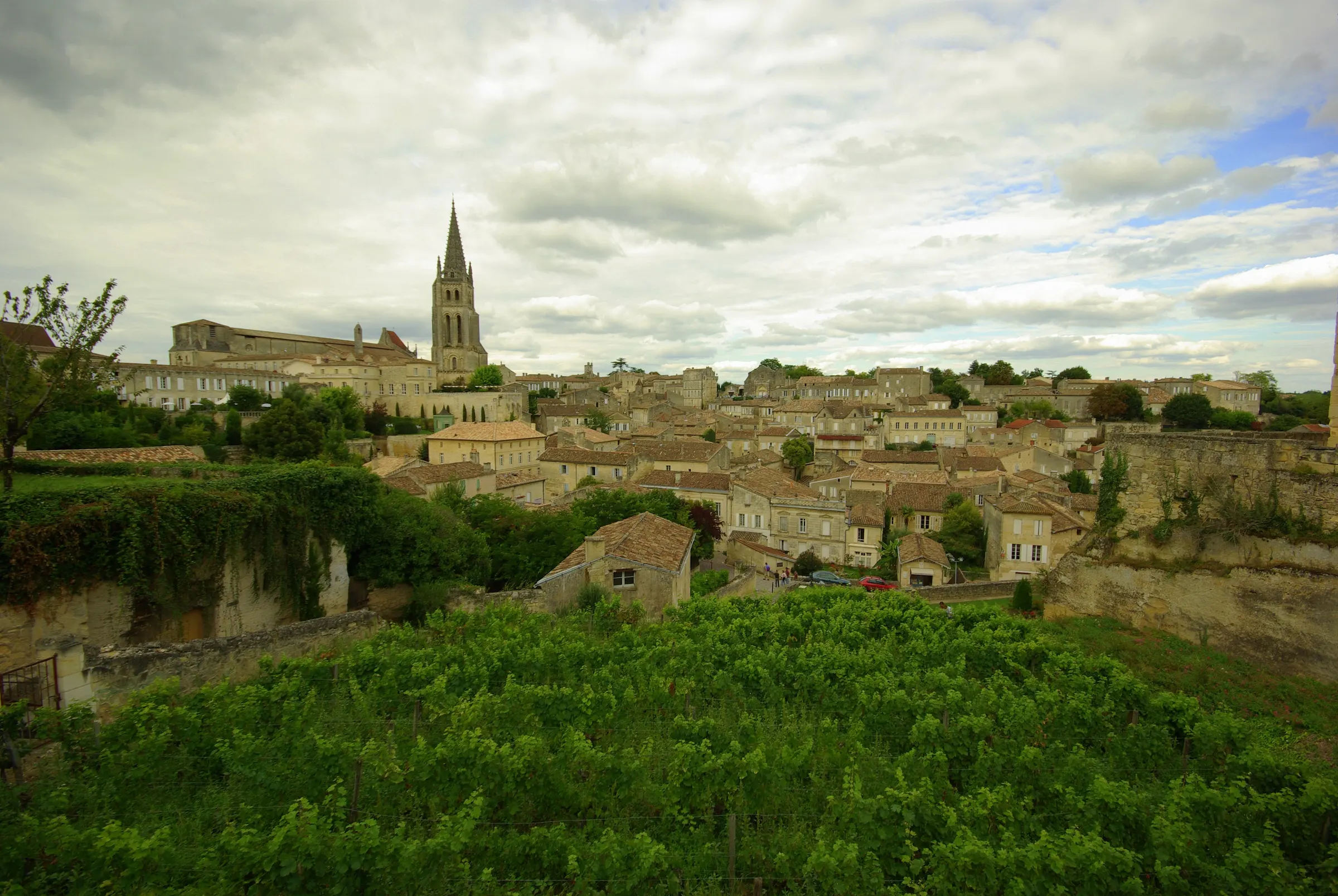
The Jurisdiction of Saint-Émilion joined the UNESCO World Heritage List on December 2, 1999, as a cultural landscape of eight villages and about 5,000 hectares of vines. The listing cites the medieval town, its monolithic church and its underground quarries.
The streets are cobbled, sometimes steep and uneven. Vehicles over 2 meters wide or over 6 tonnes cannot drive through the town. A weekly market runs on Tuesdays in high season at Parc Guadet.
The monolithic church can only be seen on the tourist office's guided underground tour. It covers four monuments and lasts about 45 minutes to 1 hour. See Saint-Émilion's monolithic church for the tour.
The tourist office suggests half a day for the essentials of the village. One day adds the underground heritage and a tasting or château visit, and two days or more add the vineyards and surrounding villages.
Médoc
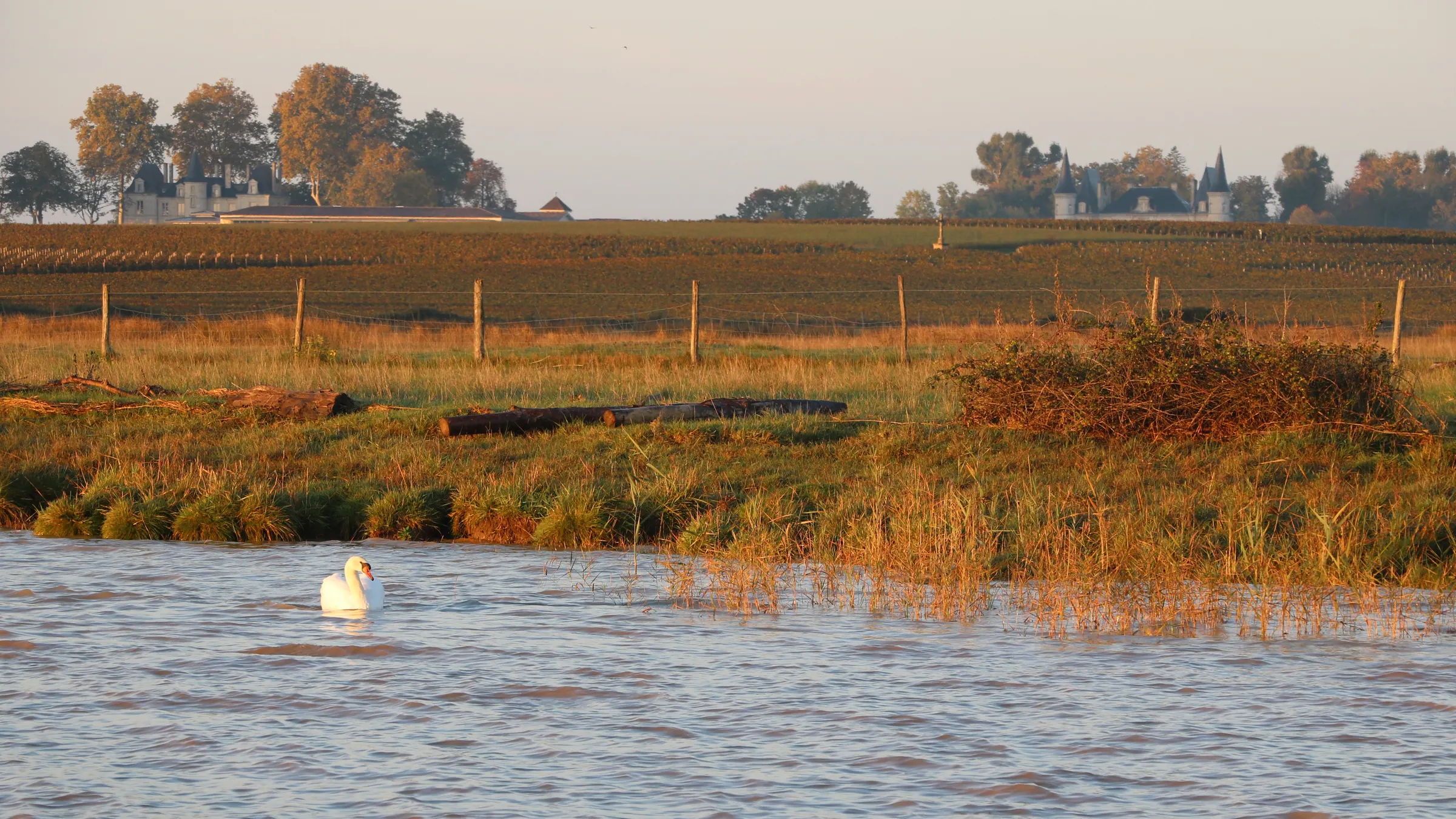
The Médoc wine route follows the D2 for about a hundred kilometers, from Blanquefort to Saint-Vivien-de-Médoc, near the Pointe de Grave. The Gironde estuary borders it to the east, and a pine forest separates it from the Atlantic to the west.
In Pauillac, the Maison du Tourisme et du Vin (La Verrerie) faces the estuary. La Randonnée des Châteaux starts there, with loops of 8 and 14 km on foot or by bike. The 14 km loop takes about 4 hours and passes Château Pontet-Canet, Château Mouton Rothschild and Château Pédesclaux. For the drive north, see the Médoc Route des Châteaux.
Getting there
The high-speed train from Paris reaches Bordeaux in about 2 hours 4 minutes, with 33 round trips a day. From Bordeaux, the fastest TER takes 29 minutes to Saint-Émilion, about 42 minutes to Margaux and 1 hour 4 minutes to Pauillac.
| Option | From | To | Time | Fare |
|---|---|---|---|---|
| High-speed train | Paris | Bordeaux | 2h04 | — |
| TER line 33 | Bordeaux | Saint-Émilion station | 29 min | From €9.50 ($10) |
| TGV | Paris | Libourne, 7 km from Saint-Émilion | — | From €25 ($27) |
| Coach line 4617 | Bordeaux Quinconces | Saint-Émilion Bourg | — | €2.50 ($3) |
| Car | Bordeaux | Saint-Émilion | About 35 min | — |
| TER | Bordeaux | Margaux Cantenac | About 42 min | — |
| TER | Bordeaux | Pauillac | 1h04 | — |
| Coach line 424 | Bordeaux | Pauillac | — | €2.50 ($3) |
| Car | Bordeaux | Margaux | About 45 min | — |
| Car | Bordeaux | Pauillac | 50 min | — |
To Saint-Émilion
About 16 TER trains a day run from Bordeaux on line 33, with tickets from €9.50 ($10). Saint-Émilion station is about 1.5 km from the village, a walk of about 20 minutes uphill, with sidewalks only in parts.
From the station, the Tuk-Tuk des Cordeliers runs transfers between 10:30 a.m. and 6 p.m. for €5 ($5) per person. Taxis must be booked in advance. TGV trains from Paris also stop at Libourne, 7 km from Saint-Émilion, with tickets from €25 ($27).
Coach line 4617 leaves Bordeaux Quinconces daily at 9 a.m., 11 a.m. and 1 p.m. and reaches Saint-Émilion Bourg at 10:05 a.m., 12:05 p.m. and 2:05 p.m. A single regional coach ticket costs €2.50 ($3) and a day round trip €4.50 ($5).
By car, allow around 35 minutes from Bordeaux, depending on traffic. The A89 Libourne exit is 12 km from the village. Paid parking costs €2 ($2) an hour, 5 hours maximum, and Espace Guadet and the station lot are free. See Bordeaux to Saint-Émilion for the full timetable.
To the Médoc
The TER Bordeaux – Le Verdon-sur-Mer line stops at Margaux, Moulis-Listrac and Pauillac. 12 trains a day run to Pauillac. Taxi or rental car is available on request from Margaux Cantenac station.
Regional coach line 424, formerly 705, runs from Bordeaux to Pauillac via Cussac-Fort-Médoc and Saint-Julien-Beychevelle, at the same €2.50 ($3) single fare.
By car, leave the Bordeaux ring road (A630) at exit 7 or 8 and take the D2 toward Blanquefort, Macau and Margaux. Margaux is about 45 minutes from Bordeaux, and Pauillac 50 minutes via the D2 or the D1215. From Paris, drivers take the A10 to Bordeaux before joining the ring road. See Bordeaux to the Médoc for more.
When to go
Both areas receive visitors all year. The Saint-Émilion tourist office is open all year with seasonal hours and closes on December 25 and certain winter days, and its château-of-the-day list shows 2 to 4 estates open each day.
In Saint-Émilion, Château Villemaurine closes from mid-December to mid-January and during en primeur week. It also closes on Wednesdays, and on Sundays from December to the end of April.
In the Médoc, Château Beychevelle takes visits Monday to Saturday from May to September and Monday to Friday from October to April. Duhart-Milon opens Monday to Friday all year. Château Lafite Rothschild is closed to visitors until January 2028.
The grape harvest usually takes place in September, depending on ripeness and weather.
Visiting the estates
The Saint-Émilion tourist office lists 155 estate visits, booked directly with an estate or through the tourist office. In Pauillac, the Maison du Tourisme et du Vin books visits to its partner châteaux and provides a map of the Grand Cru châteaux.
Saint-Émilion estates
- Château Villemaurine, Grand Cru Classé: visits by appointment only, booked online. The 1-hour Visite Patrimoine includes the château's underground quarries, in French at 11:30 a.m. and in English at 4:30 p.m. Children under 12 go free.
- Château Troplong Mondot: the Getaway visit lasts 1 hour 30 minutes, with a vineyard walk and a tasting of 2 wines, in English.
- Château Figeac: a visit of 1 hour or 1 hour 30 minutes ends with a guided tasting of two or three wines, in English and Spanish.
- Clos Systey: on the château-of-the-day list, open 10 a.m. to 6 p.m., with visits of 1 hour or 1 hour 30 minutes.
Médoc estates
- Château Lynch-Bages, Pauillac: the cellar tour lasts 1 hour 30 minutes, Monday to Saturday from 9 a.m. to 12:30 p.m. and 2 p.m. to 6 p.m., in French, English and German depending on availability.
- Château Duhart-Milon, in the village of Pauillac near the estuary and docks: the 30-minute Guided Tasting needs no reservation, subject to availability. The 1-hour Discovery Tour and the 1.5-hour Experience Tour are by reservation only.
- Château Beychevelle, Saint-Julien-Beychevelle: tours by appointment only, including the Amiral at 1 hour 15 minutes. The Bordeaux tourist office calls Beychevelle the Versailles of Médoc.
- Château Mouton Rothschild, Pauillac: private tours for eight people maximum, about two to two and a half hours, followed by a tasting, in French, English or another language with an interpreter. A booking is final only after the château team confirms it.
The Bordeaux tourist office runs half-day coach tours to both areas from 12 Cours du 30 Juillet, leaving at 1:30 p.m. and returning about 6:30 p.m. The Saint-Émilion tour includes the underground church and a tasting at one winery. The Châteaux & Terroirs tour goes to the Médoc on Tuesdays and Saturdays, with two château visits.
What it costs
In Saint-Émilion, estate visits on the tourist office listing run from €7 ($8) at Château Cadet Pontet to €80 ($86) at Château Figeac. Clos Saint-Julien starts at €10 ($11), Château Cadet Bon at €15 ($16), and Château Guadet and Château Balestard La Tonnelle at €20 ($22).
Château Villemaurine charges €25 ($27), Couvent des Jacobins from €28 ($30) and Clos Badon-Thunevin – Le Garage €30 ($32). Troplong Mondot's Getaway costs €50 ($54). On the château-of-the-day list, Clos Systey costs €15 ($16), Château Carteau Côtes Daugay €5 ($5) and two Puisseguin estates nothing.
In the Médoc, entry-level visits with a tasting run from €15 ($16) to €40 ($43). Château Lafon-Rochet starts at €15 ($16), Duhart-Milon's Guided Tasting €20 ($22), Lynch-Bages's cellar tour €25 ($27) and Château Kirwan €30 ($32). Beychevelle's Amiral and Branaire-Ducru each cost €40 ($43).
Château Margaux offers tasting only to professionals. Ask Mouton Rothschild about the fee when you book.
The Bordeaux tourist office's half-day tours to Saint-Émilion and to the Médoc each cost €55 ($59) per person.
Before you go
- In the Médoc, unless a château clearly announces visits without an appointment, a visit is always by reservation, and some estates are booked up for several days. In Saint-Émilion, reservations with the château-of-the-day estates are compulsory, and the tourist office strongly recommends booking château visits in advance.
- Château Margaux and Château Mouton Rothschild receive visitors Monday to Friday only, close on weekends and public holidays and stop visits during the harvest. Château Margaux also closes in August, and Mouton must be booked at least two months ahead.
- The direct coach to Saint-Émilion village runs only from August 29 to November 1, 2026 and from April 10 to June 25, 2027. Outside high season it stops at Libourne, 7 km away, where you take a taxi.
The underground monuments and some cellars in Saint-Émilion stay around 13°C, so bring a warm layer. The tourist office also strongly recommends booking the underground tour ahead, because places are limited.
Frequently asked questions
Is Saint-Émilion or the Médoc closer to Bordeaux?
The fastest TER from Bordeaux reaches Saint-Émilion in 29 minutes, Margaux in about 42 minutes and Pauillac in 1 hour 4 minutes. By car, allow around 35 minutes to Saint-Émilion, about 45 minutes to Margaux and 50 minutes to Pauillac.
Can I visit Saint-Émilion or the Médoc without a car?
Yes. TER line 33 stops at Saint-Émilion station, 1.5 km from the village, and the Le Verdon-sur-Mer line stops at Margaux, Moulis-Listrac and Pauillac. The Bordeaux tourist office also runs €55 ($59) half-day coach tours to each area.
Do I need to book château visits in advance?
Château-of-the-day estates in Saint-Émilion take reservations only, and Médoc châteaux work by reservation unless they announce otherwise. Duhart-Milon in Pauillac runs a 30-minute Guided Tasting with no reservation, subject to availability, Monday to Friday.
What grapes grow in Saint-Émilion and the Médoc?
Saint-Émilion is mostly merlot, blended with cabernet franc or cabernet sauvignon and some malbec. In the Médoc, Saint-Julien grows cabernet sauvignon on gravel, while merlot dominates in Listrac and the Médoc AOC.