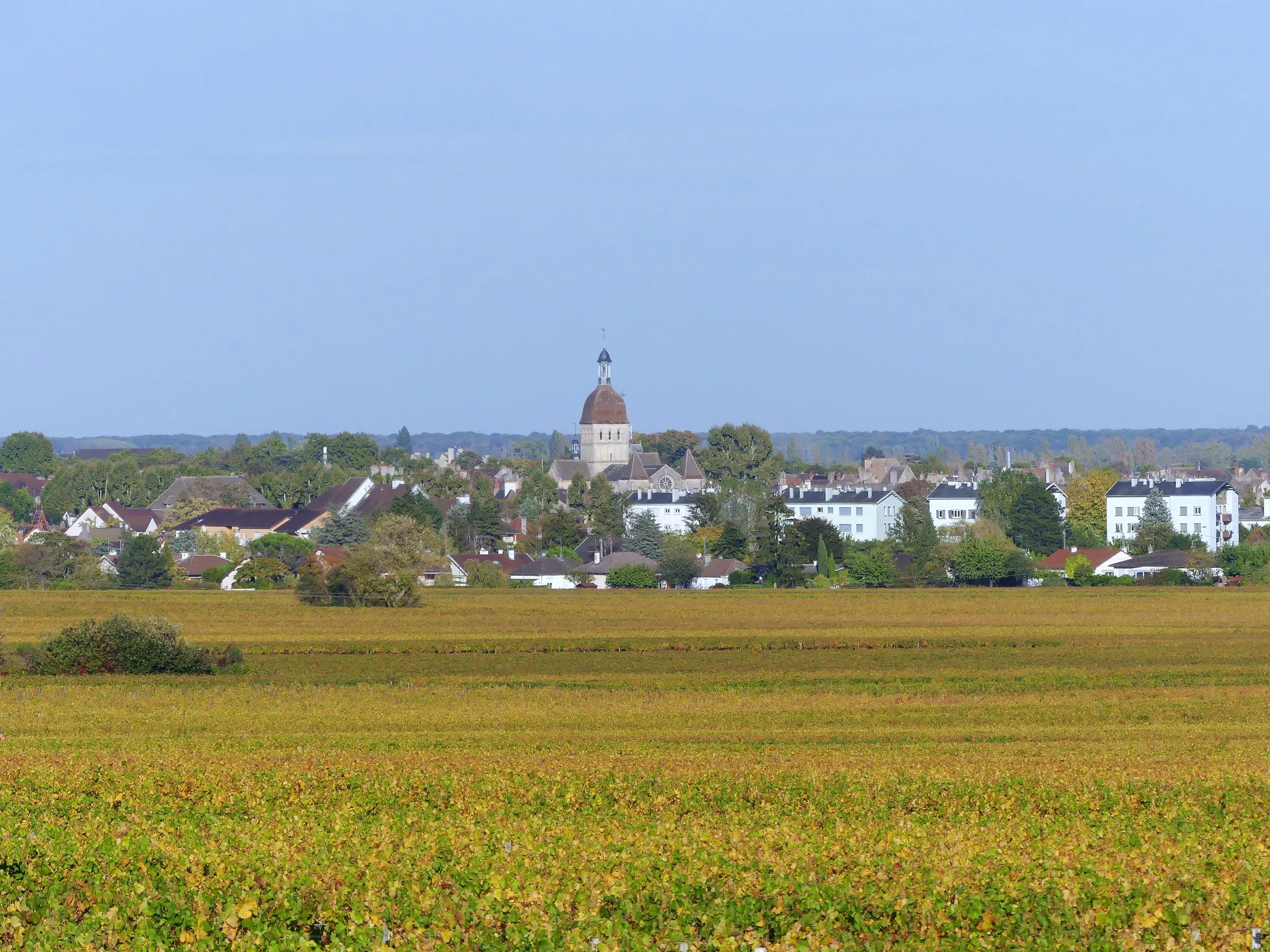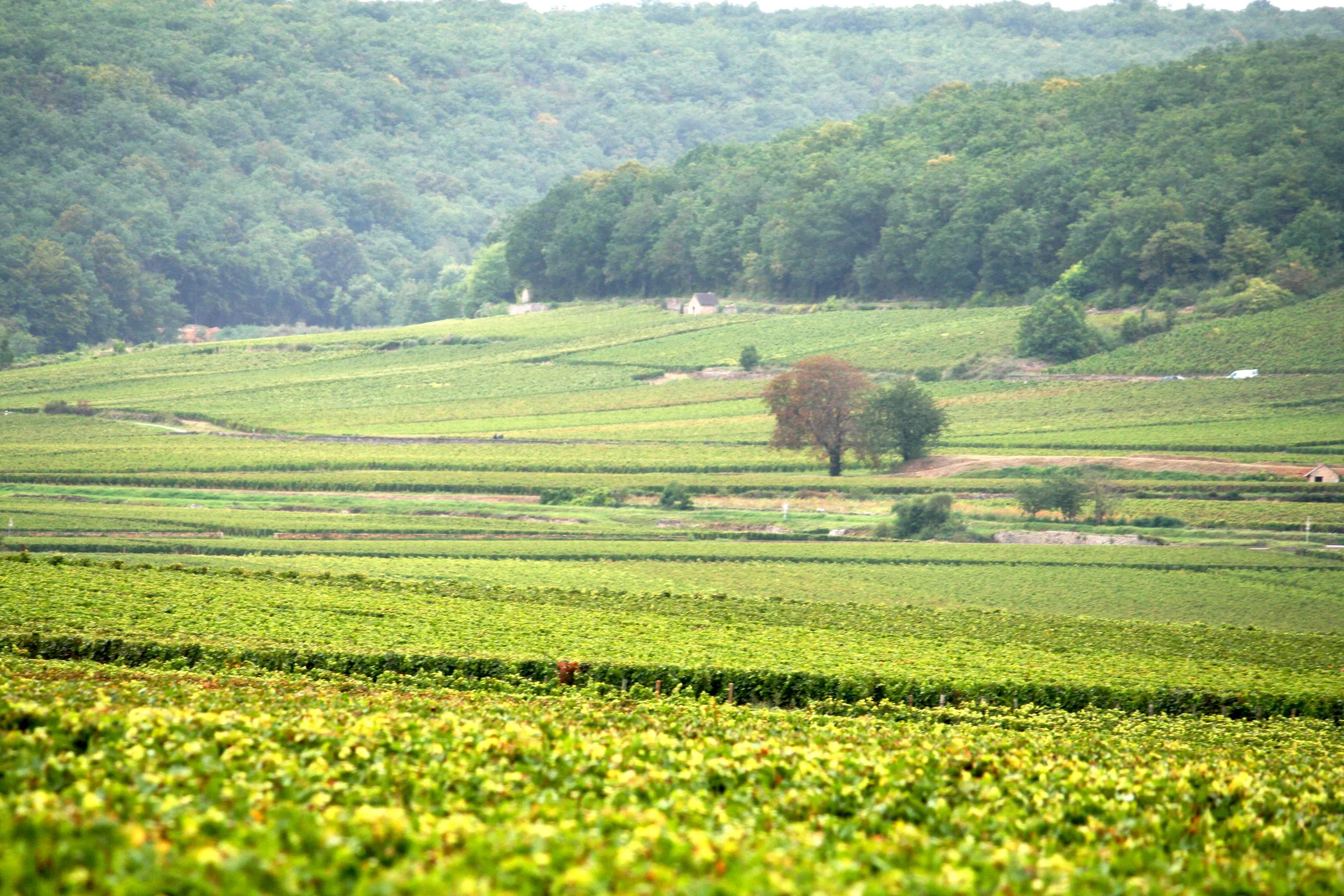
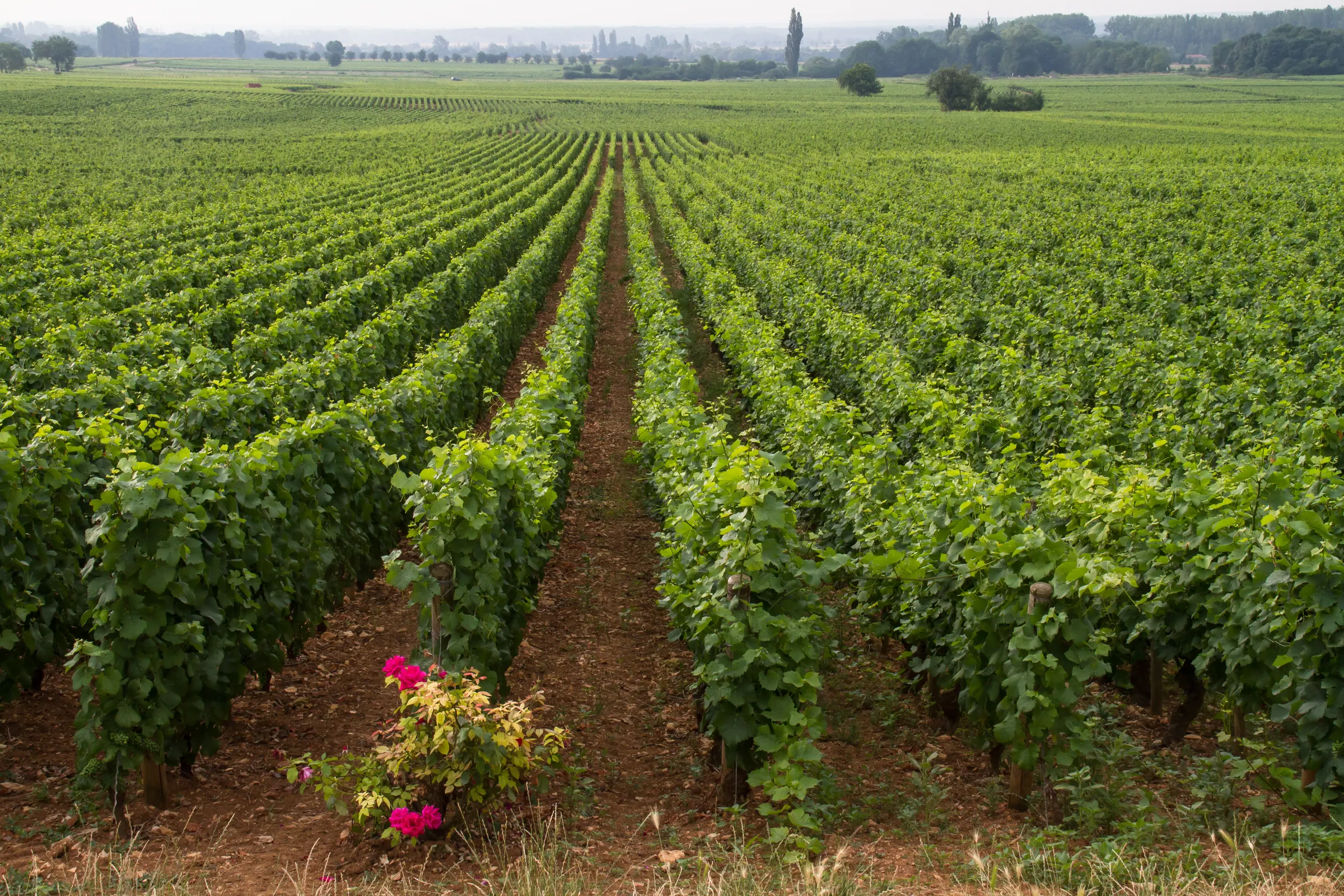
The Route des Grands Crus is Burgundy's 60 km wine road from Dijon to Santenay, by way of Nuits-Saint-Georges and Beaune. Brown signs with a white grape cluster mark it through 37 wine villages of the Côte de Nuits and the Côte de Beaune.
The route was created in 1937, and Burgundy Tourism calls it the first wine route in France. It passes 32 of Burgundy's 33 grands crus. The vineyards along it are part of the Climats, terroirs of Burgundy, inscribed on the UNESCO World Heritage List on July 4, 2015.
This guide covers getting to Dijon from Paris, the route village by village, cycling the parallel Voie des Vignes, and which estates along the way take visitors, when and for how much. For the wider region, see Burgundy.
Getting there
The fastest way from Paris is the direct TGV from Paris Gare de Lyon to Dijon, which takes 1 hour 35 minutes. Dijon is the start of the route. To start in Beaune instead, the train takes 2 hours 15 minutes with a change at Dijon.
By road, Beaune is 312 km from Paris on the A6 highway. Leave at exit 24.0 for Savigny-lès-Beaune and Beaune-Saint-Nicolas, or exit 24.1 for Beaune-Centre and Beaune-Hospices. Traffic information is broadcast on 107.7 FM.
| Option | From | To | Time or distance |
|---|---|---|---|
| Direct TGV | Paris Gare de Lyon | Dijon | 1h35 |
| TGV and TER, change at Dijon | Paris Gare de Lyon | Beaune | 2h15 |
| Car on the A6, exit 24.0 or 24.1 | Paris | Beaune | 312 km |
| TER | Dijon | Gevrey-Chambertin | Under 10 min |
| TER, fastest | Dijon | Beaune | 18 min |
| Car on the A6, exit 24 | Dijon | Beaune | 45 km |
TER trains on the line from Dijon to Beaune, Chalon, Mâcon and Lyon carry bikes free. Stations near the route include Gevrey-Chambertin, Vougeot-Gilly-lès-Cîteaux, Nuits-Saint-Georges, Corgoloin, Beaune, Meursault and Santenay. More detail is in Paris to Beaune by train, Dijon to Beaune and Burgundy without a car.
The route, village by village
The Beaune tourist office recommends following the route north to south, from Dijon to Santenay, and allowing 3 to 4 days for all of it. You can also join or leave it at other points along the way.
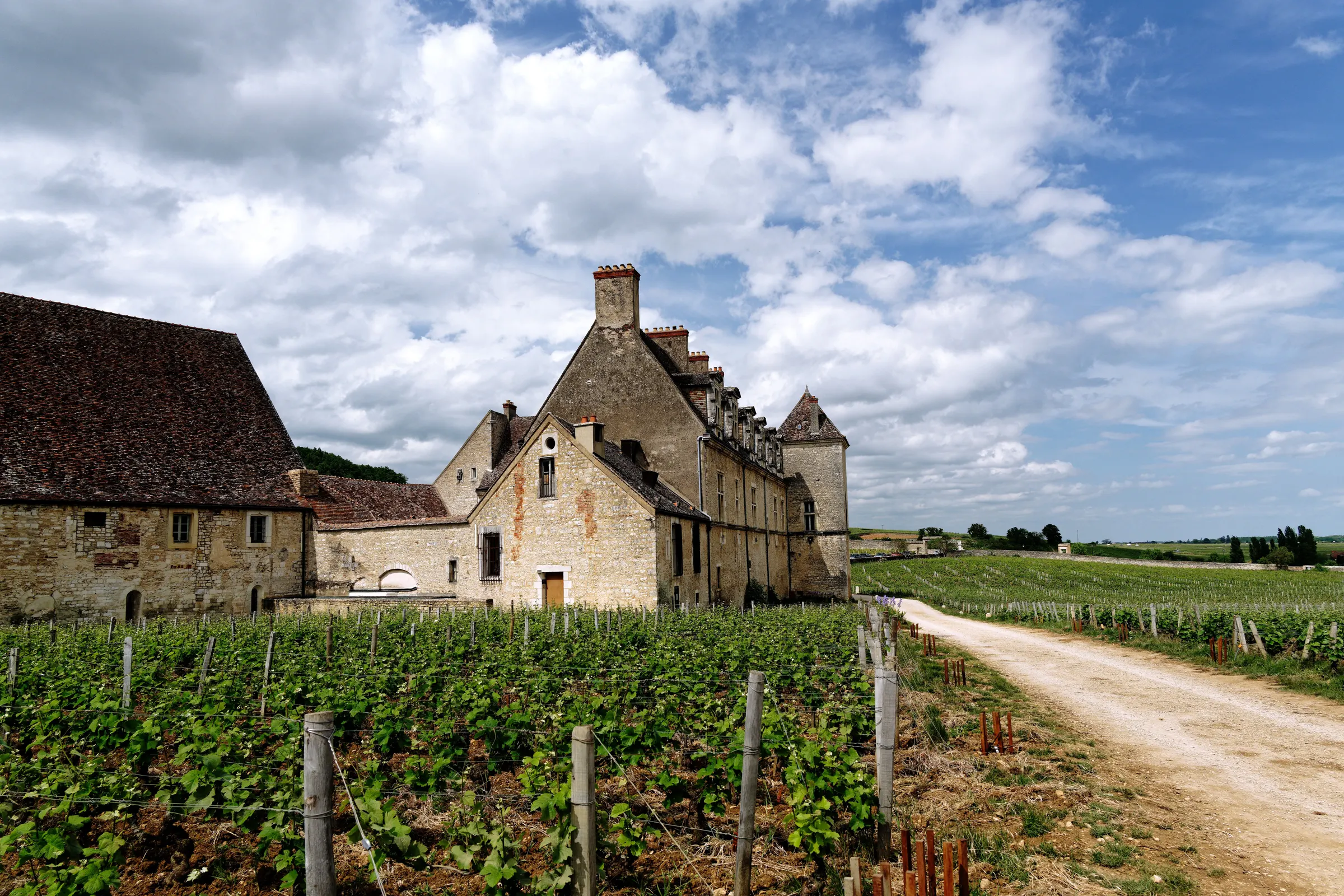
The vineyards form a narrow strip no more than 2 km wide, at 300 to 400 m elevation. Clos are walled vine plots, some with an archway naming the estate that owns the plot. Cabottes are small dry-stone or brick shelters where winegrowers rested and ate.
The UNESCO-listed slope is made up of 1,247 vineyard parcels, the Climats, each with its own name. The listing also includes the town of Beaune and the historic center of Dijon.
Côte de Nuits: Dijon to Corgoloin
The first section runs from Dijon to Corgoloin, parallel to the former N74, now the D974. The Côte de Nuits holds 24 of Burgundy's 33 grands crus.
In Chenôve, the presses of the Dukes of Burgundy date from the 14th century. Gevrey-Chambertin is 15 km from Dijon. Its Halle Chambertin houses the Gevrey-Nuits tourist office and a free visit with 15 interactive modules on the area's history, heritage and vineyards.
In Vougeot, the Château du Clos de Vougeot was built from the 12th century by the monks of Cîteaux Abbey. It is the seat of the Confrérie des Chevaliers du Tastevin. In Nuits-Saint-Georges, the Gevrey-Nuits tourist office has a second office at 3 rue Sonoys.
Côte de Beaune: Corgoloin to Santenay
The second section runs from Corgoloin to Santenay and on to the Maranges hillside. At Aloxe-Corton, the Corton hill sits between the Côte de Nuits and the Côte de Beaune, and part of the Grand Cru Corton-Charlemagne is made there.
In Beaune, the Hôtel-Dieu of the Hospices de Beaune was founded in 1443 by Nicolas Rolin. The Cité des Climats et vins de Bourgogne, at 21 avenue Charles de Gaulle, runs a visitor trail that includes a tasting of wines or fruit juices.
Côte de Beaune villages on the route include Pommard, Meursault, Puligny-Montrachet, Chassagne-Montrachet and Santenay. Puligny-Montrachet and Chassagne-Montrachet share five white Grands Crus: Montrachet, Bâtard-Montrachet, Chevalier-Montrachet, Bienvenues-Bâtard-Montrachet and Criots-Bâtard-Montrachet.
Pinot noir and chardonnay are the main grapes along the route. Aligoté and gamay also grow there.
Cycling the Voie des Vignes
The Voie des Vignes is a cycle route that runs parallel to the Route des Grands Crus, reserved for walkers and cyclists. It is mostly smooth asphalt, with picnic tables and illustrated information panels.
The northern section runs 45 km from Beaune to Dijon. It passes Savigny-lès-Beaune, Pernand-Vergelesses, Aloxe-Corton, Premeaux-Prissey, Chambolle-Musigny, Morey-Saint-Denis, Gevrey-Chambertin, Brochon, Fixin, Couchey and Marsannay.
The southern section runs 22 km from Beaune to Santenay via Pommard, Volnay, Meursault, Puligny-Montrachet and Chassagne-Montrachet, on local roads with a slight gradient. From Santenay, a 14 km section follows an old railway line to Nolay.
The tourist offices in Nolay, Santenay and Chagny rent classic and electric bikes. At Santenay station, a bike costs €15 ($16) a day and an electric bike €35 ($38) a day. The Gevrey-Chambertin tourist office rents electric bikes at €15 ($16) an hour, €30 ($32) a half-day and €45 ($49) a day.
The Chemin des Grands Crus is a separate footpath and cycle path alongside the route.
When to go
Estates along the route receive visitors all year. Through the seasons:
- April to June: green vines and smaller crowds, with unsettled weather.
- July and August: busy, with cellars open, and it can be crowded and hot.
- September and October: harvest season.
- November to March: colder weather and shorter days.
The Fascinating Weekend wine event takes place on the third weekend of October. The Hospices de Beaune wine sale weekend is November 13–15, 2026.
Some sites change hours with the season. Château de Meursault opens every day from 10 a.m. to 6:30 p.m. from May to September. From October to April it opens 10 a.m. to noon and 2 p.m. to 6 p.m., and from mid-November to the end of March it closes on Sunday afternoons, Mondays and Tuesdays.
Château de Pommard opens every day, 10:30 a.m. to 6:30 p.m. from April 1 to November 30 and 10:30 a.m. to 6 p.m. from December 1 to March 31. The Château du Clos de Vougeot opens 9:30 a.m. to 6 p.m. from April 1 to October 31 and 10 a.m. to 5 p.m. from November 1 to March 31.
Visiting the estates
The Beaune tourist office recommends booking estate visits ahead. Some estates take visitors without an appointment.
Côte de Nuits
Domaine René Leclerc in Gevrey-Chambertin takes visits by appointment, with four of the domaine's wines tasted. Domaine Tortochot, also in Gevrey-Chambertin, receives visitors by appointment only.
The Château du Clos de Vougeot needs no reservation for its self-guided visit. Guided tours in English run daily at 11:30 a.m. and 3:30 p.m., last about an hour and must be booked.
In Nuits-Saint-Georges, Domaine Henri Gouges, at 7 rue du Moulin, takes visits preferably by appointment. It opens Monday afternoon to Saturday, 10 a.m. to 1 p.m. and 2 p.m. to 6 p.m. Jean-Claude Boisset – Les Ursulines runs daily guided tours with a tasting, by appointment only, in French and English. They last about 1 hour 30 minutes, for 12 people at most.
Côte de Beaune
In Beaune, Caves Patriarche Père & Fils, at 5 rue du Collège, runs a self-guided cellar tour followed by six wines, with no reservation needed, subject to availability. Visits run daily from 9:30 a.m. to 11 a.m. and 2 p.m. to 5 p.m., for 10 people per departure. Maison Bouchard Aîné & Fils runs the Parcours des 5 Sens, a guided cellar tour with five wines, booked by phone.
At Château de Pommard, every experience is by reservation only. The cellars can't be visited during a restoration and expansion project. At Château de Meursault, the Grands Terroirs tour of the château and cellars has seven wines, takes 1 hour 15 minutes to 1 hour 30 minutes, and must be booked.
In Santenay, Château Philippe le Hardi runs the visit "Au cœur du fief de Santenay" through the cellars and vat room of its 98-hectare domaine, ending with five wines. From March 30 to November 15, 2026, departures run Monday to Saturday by appointment at 10:30 a.m. and 3 p.m., in French or English. From January 2 to March 29 and from November 16 to December 18, 2026, it takes visits Monday to Friday by appointment only.
For how booking works across the region, see Booking Burgundy domaine visits.
What it costs
Entry-level tastings along the route cost €15–59 ($16–64). Longer formulas cost more, up to €250 ($270) at Domaine Tortochot.
- Jean-Claude Boisset: tasting €15 ($16), tour and tasting €35 ($38) or €50 ($54).
- Domaine Henri Gouges: Découverte €20 ($22) for three wines, Terroir €45 ($49) for five, Authenticité €75 ($81) for six.
- Domaine René Leclerc: €20 ($22) per person.
- Domaine Tortochot: From Vineyard to Cellar, €40–250 ($43–270).
- Caves Patriarche: €25 ($27) per adult.
- Marché aux Vins, Beaune: cellar tour with five wines, €25 ($27) online or €29 ($31) on site.
- Château de Pommard: Discover Burgundy Tasting, €30 ($32), 45 minutes, four wines, up to eight people.
- Château de Meursault: Grands Terroirs €59 ($64), private Prestige €105 ($113), Exclusive €175 ($189).
Heritage sites charge separately. The Château du Clos de Vougeot's self-guided visit costs €12 ($13) for adults at its 2025 rates, or €9.50 ($10) if you arrive by Mobigo train at Vougeot station and show your ticket. The Hôtel-Dieu in Beaune costs €12.50 ($14) for adults, and the Cité des Climats visitor trail €14.50 ($16).
For the price of the Château Philippe le Hardi visit, ask the château when you book, on 03 80 20 61 87.
Before you go
- During the harvest, in September and October, some estates are less available and farm machinery is on the roads. From November to March, fewer wineries are open.
- Many domaines receive visitors only by appointment: René Leclerc runs visits only at 11 a.m. and 3 p.m., Domaine Tortochot is closed on weekends, and Château Philippe le Hardi is closed on Sundays.
- In France the legal blood alcohol limit for drivers is 0.5 g per liter of blood, and 0.2 g per liter for drivers on a probationary license. Spit as you taste if you are driving.
Frequently asked questions
How long is the Route des Grands Crus?
The Route des Grands Crus is 60 km long and runs from Dijon to Santenay through Nuits-Saint-Georges and Beaune. It passes 37 wine villages of the Côte de Nuits and the Côte de Beaune, and brown signs with a white grape cluster mark the way.
How many days do I need for the Route des Grands Crus?
The Beaune tourist office suggests allowing 3 to 4 days to cover the whole route, following it north to south from Dijon to Santenay. You can also join or leave the route at other points along the way.
Can I cycle the Route des Grands Crus?
Yes. The Voie des Vignes runs parallel to the road for walkers and cyclists: 45 km from Beaune to Dijon and 22 km from Beaune to Santenay, mostly on smooth asphalt. TER trains on the Dijon–Beaune line carry bikes free, and the Santenay, Nolay and Chagny tourist offices rent bikes.
Do I need to book estate visits on the route?
The Beaune tourist office recommends booking ahead. Domaine René Leclerc, Domaine Tortochot and Jean-Claude Boisset take visitors by appointment, and Château de Pommard by reservation only. Caves Patriarche in Beaune and the self-guided visit at the Château du Clos de Vougeot need no reservation.